

Chongqing, China | XISUI Design
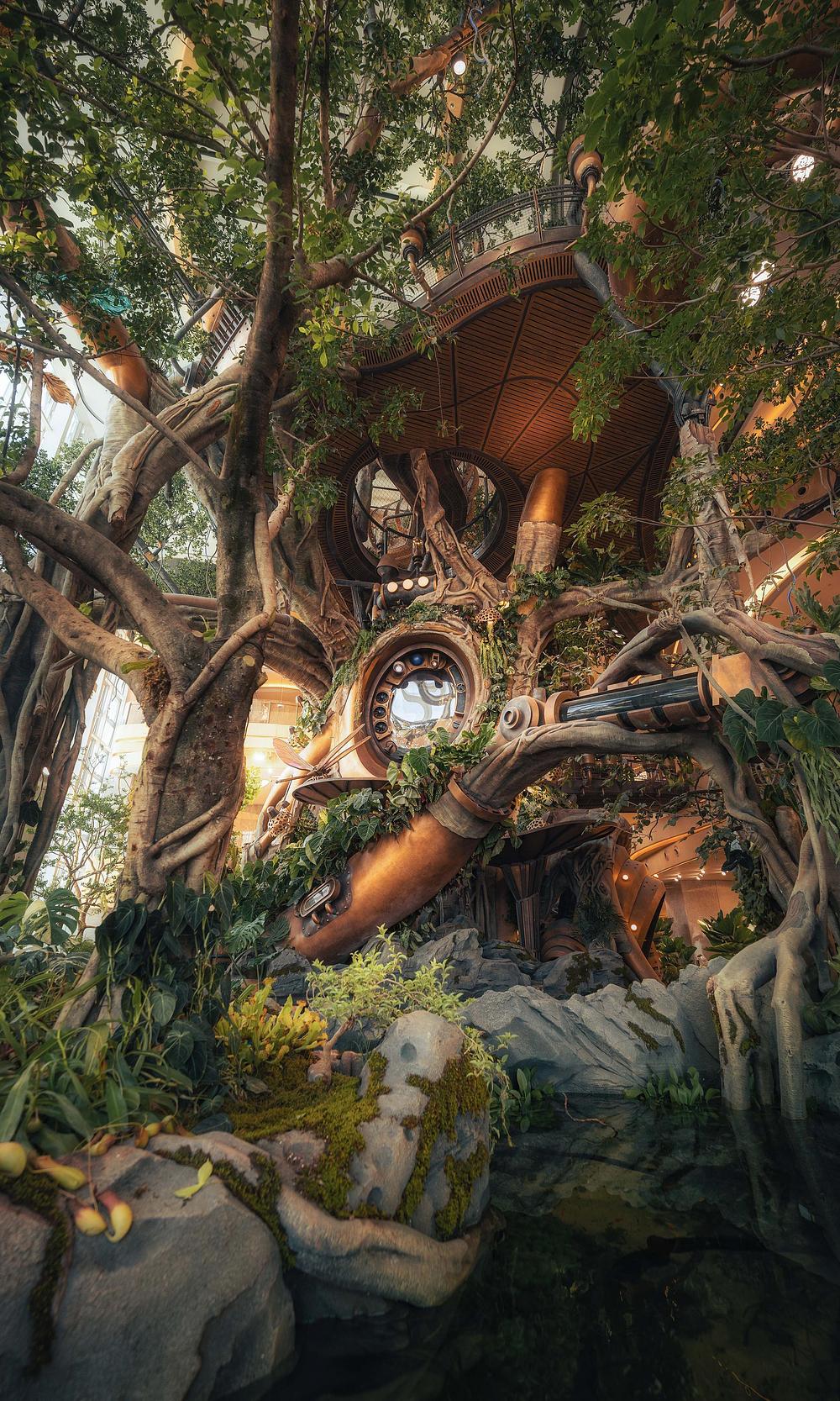
In the vast commercial atrium of THE RING · GARDEN CITY in Chongqing, XISUI Design has created Wonder Tree, a monumental installation that challenges the conventional boundaries between architecture, landscape, technology, and environmental education. Rising 20 metres through four levels of retail space and occupying more than 4,000 square metres, the project transforms an interior commercial environment into an immersive, vertical ecosystem.
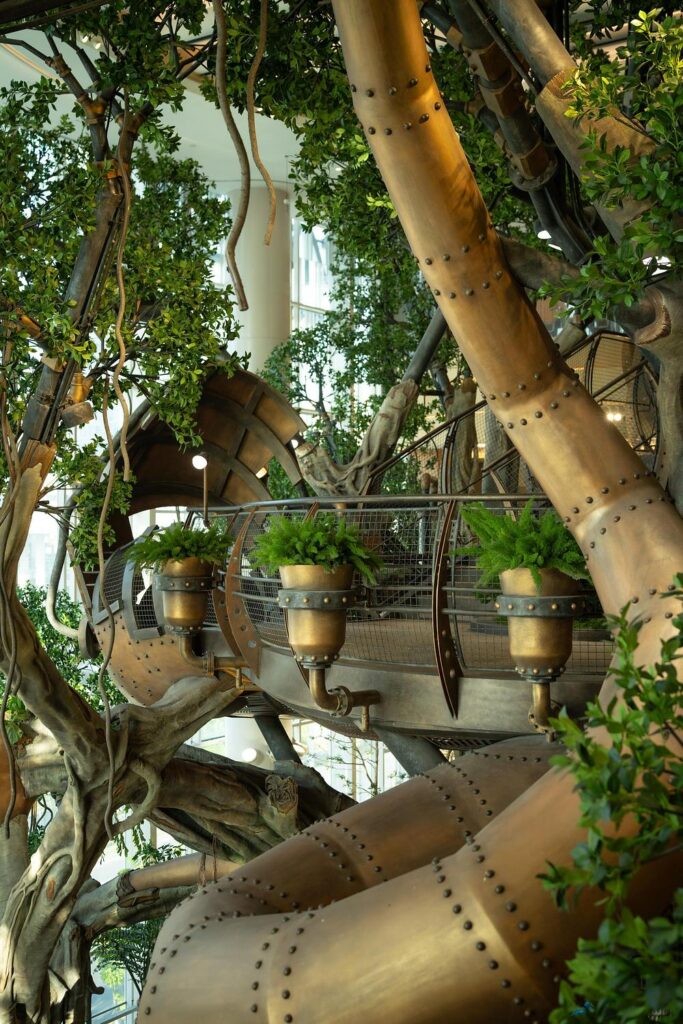
Part architectural installation, part ecological laboratory, and part fantastical landscape, Wonder Tree imagines a future in which technological innovation is placed in service of ecological restoration. Its language draws from the machinery and optimism of the Industrial Revolution, combining exposed mechanical structures, metallic components, and intricate pipelines with dense vegetation and organic forms.
The result is a contemporary interpretation of the Steampunk aesthetic, but beneath its theatrical appearance lies a more serious proposition: can technology become an instrument for restoring the natural systems that human development has disrupted?
A Fictional Machine for Ecological Restoration
The conceptual narrative imagines the Wonder Tree as a living organism capable of travelling across the planet, purifying damaged environments and restoring ecological balance. Its mechanical components represent humanity’s technological capabilities, while its vegetation and biological systems symbolize the resilience and regenerative capacity of nature.
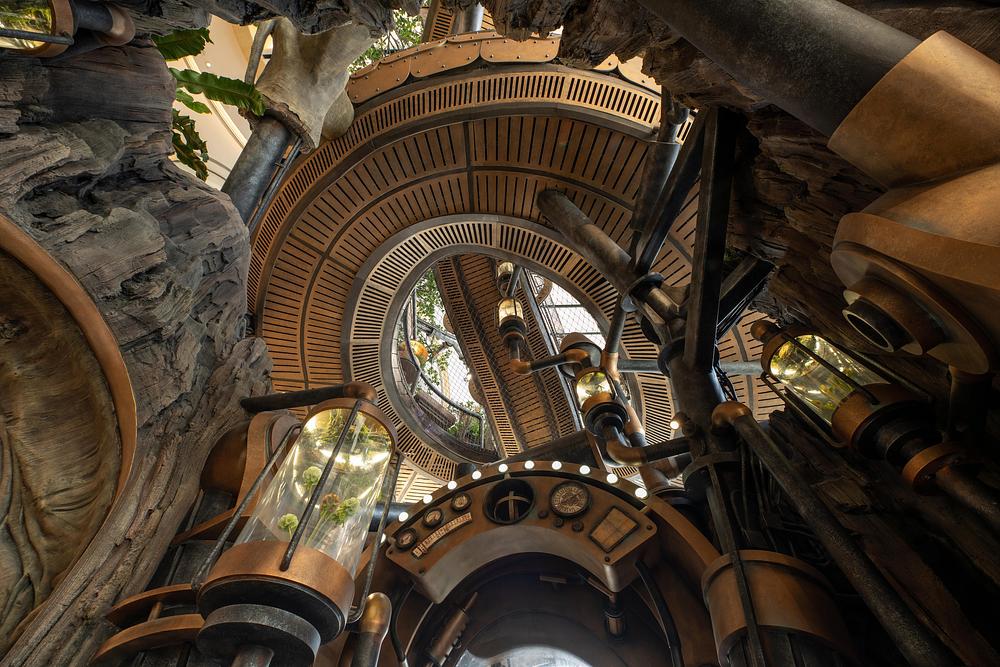
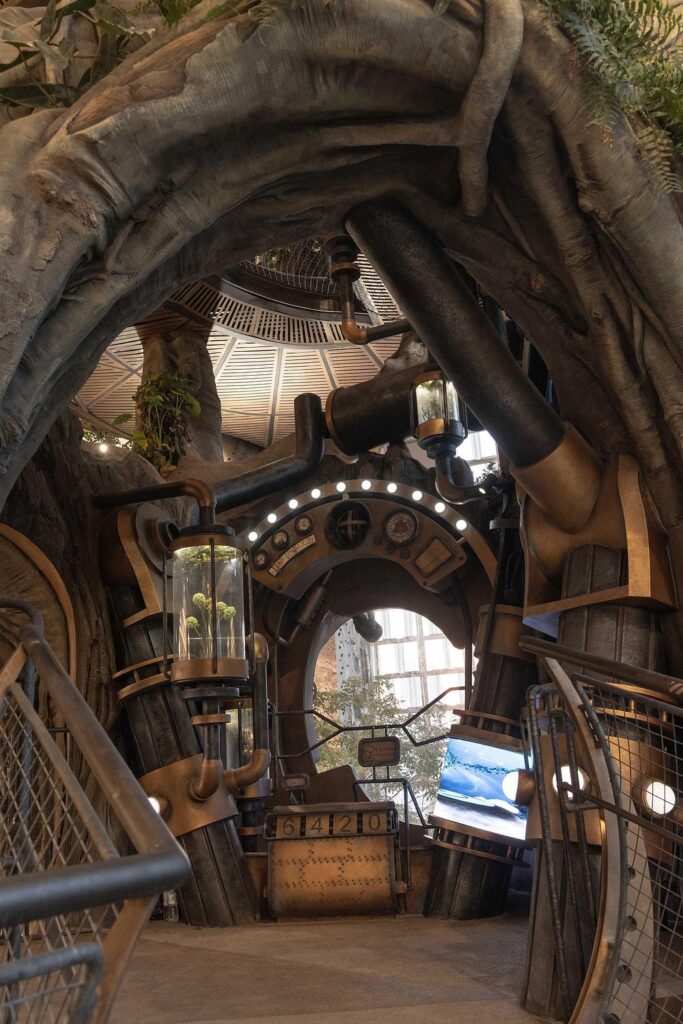
This narrative unfolds vertically through a sequence of interconnected environments. At ground level, visitors enter through a monumental tree hollow, where metallic machinery merges with roots and branches. The “Seed Museum” functions as the symbolic energy core of the installation, presenting biodiversity as a resource that must be protected and preserved.
Developed in collaboration with Chongqing Natural History Museum, the project incorporates hundreds of rare seeds collected from ecologically diverse regions of China, including Heilongjiang, Ningxia, the Greater Khingan Range, and Xishuangbanna. Interactive displays allow visitors to investigate individual species, transforming the preservation of biodiversity into an accessible public experience.
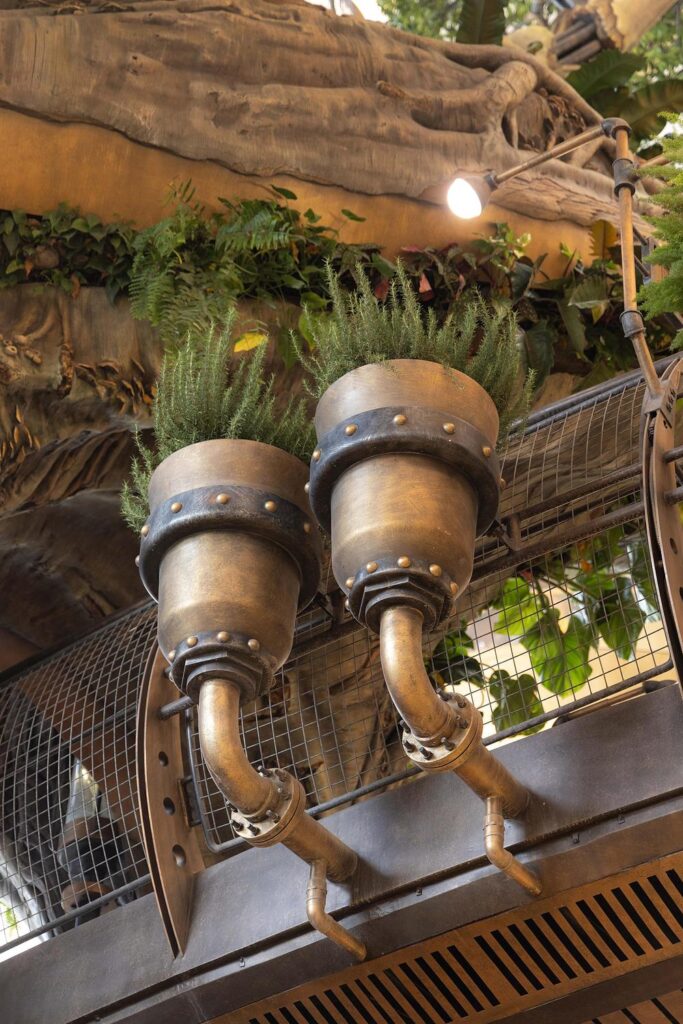
Above, the “Gene Cabin” represents a controlled scientific environment where seeds are cultivated under protected conditions. The installation’s “World Eye” creates a visual connection between the interior of the tree and the surrounding atrium, reinforcing the project’s emphasis on interaction between people, technology, and living systems.
At the upper level, the “Eden of Lives” represents the transition from controlled cultivation to open growth. Germinated plants emerge into a more natural environment, illustrating the potential of science and technology to support ecological recovery and species diversity.
Making Environmental Systems Visible
One of the project’s most compelling qualities is its attempt to make normally hidden environmental processes visible. Its water purification system, represented through a network of mechanical roots, describes a closed-loop process in which contaminated water is filtered, biologically treated, aerated, sterilized, and ultimately returned to the ecosystem.
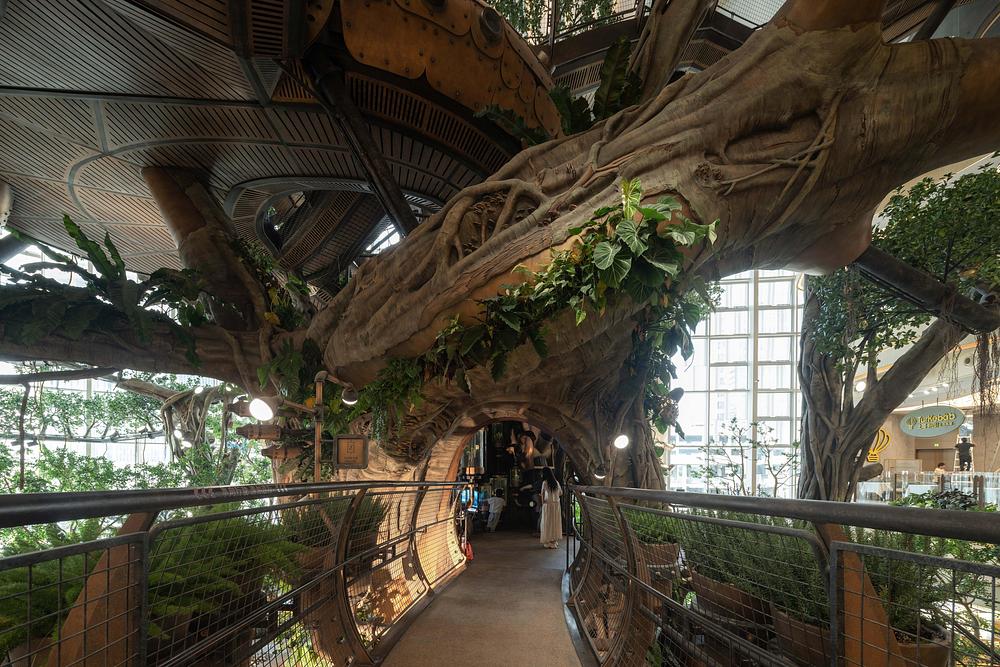
Visitors can activate elements of the system through interactive interfaces, observing simulated mechanical filtration, biological purification, and disinfection processes. The result is an unusual fusion of environmental education and entertainment, allowing visitors to engage with the principles of water treatment rather than simply observing them.
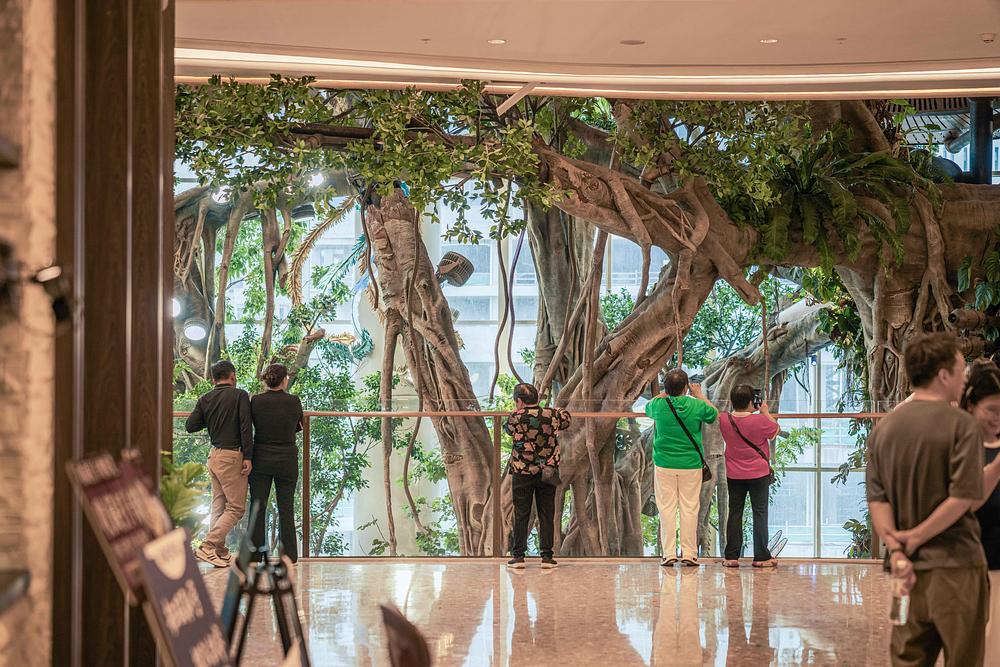
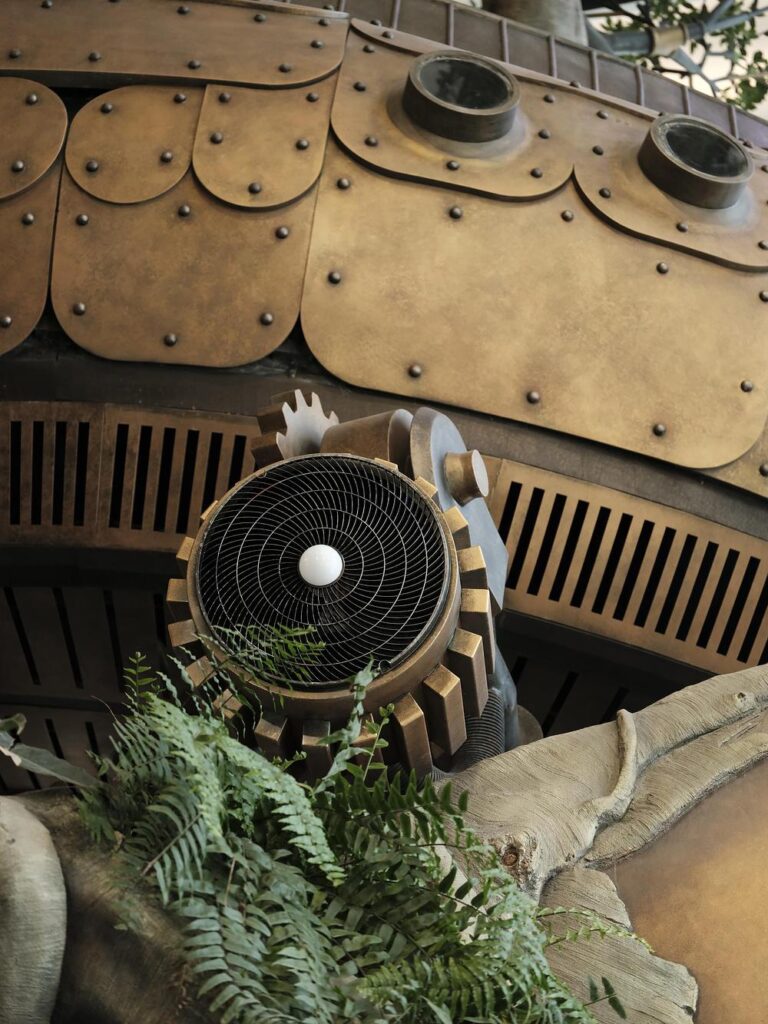
The same philosophy informs the air purification strategy. Fans, ventilation systems, plant grow lights, and mechanical pipelines are integrated into the architecture, supporting air circulation and creating suitable conditions for indoor vegetation. Rather than concealing these technical systems, the design incorporates them into the visual language of the Wonder Tree, turning infrastructure into part of the architectural narrative.
A Mechanical Menagerie
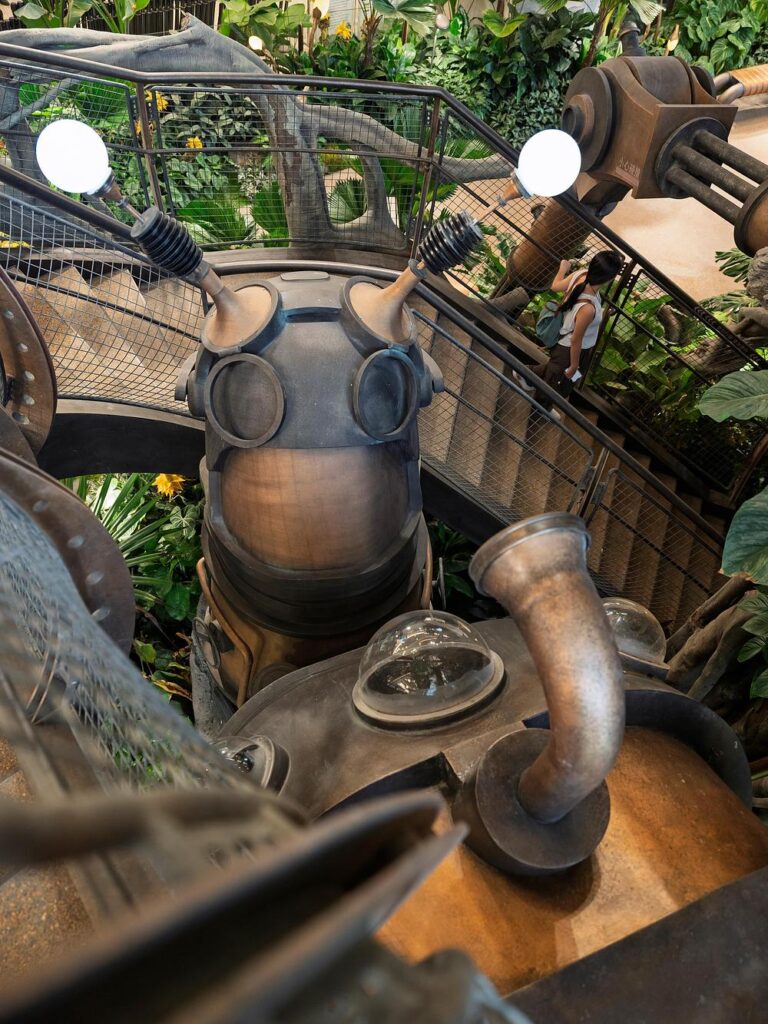
The installation’s mechanical creatures further blur the boundary between technology and biology. A five-metre-tall mechanical snail, inspired by industrial turbines and tracked machinery, incorporates a children’s play structure with a spiral staircase, periscope, and slide.
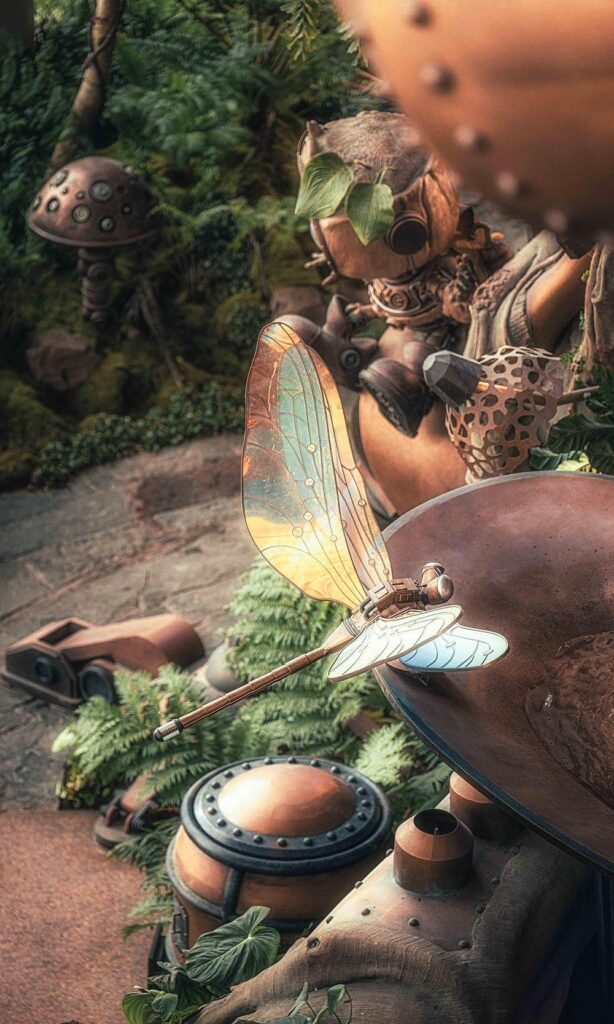
A mechanical dragonfly, conceived as a maintenance technician, introduces a lighter, more delicate counterpart to the installation’s heavy industrial vocabulary. The Great Loong Guardian coils around the tree, simultaneously functioning as a mythical creature and a protective guardrail for the elevated walkways.
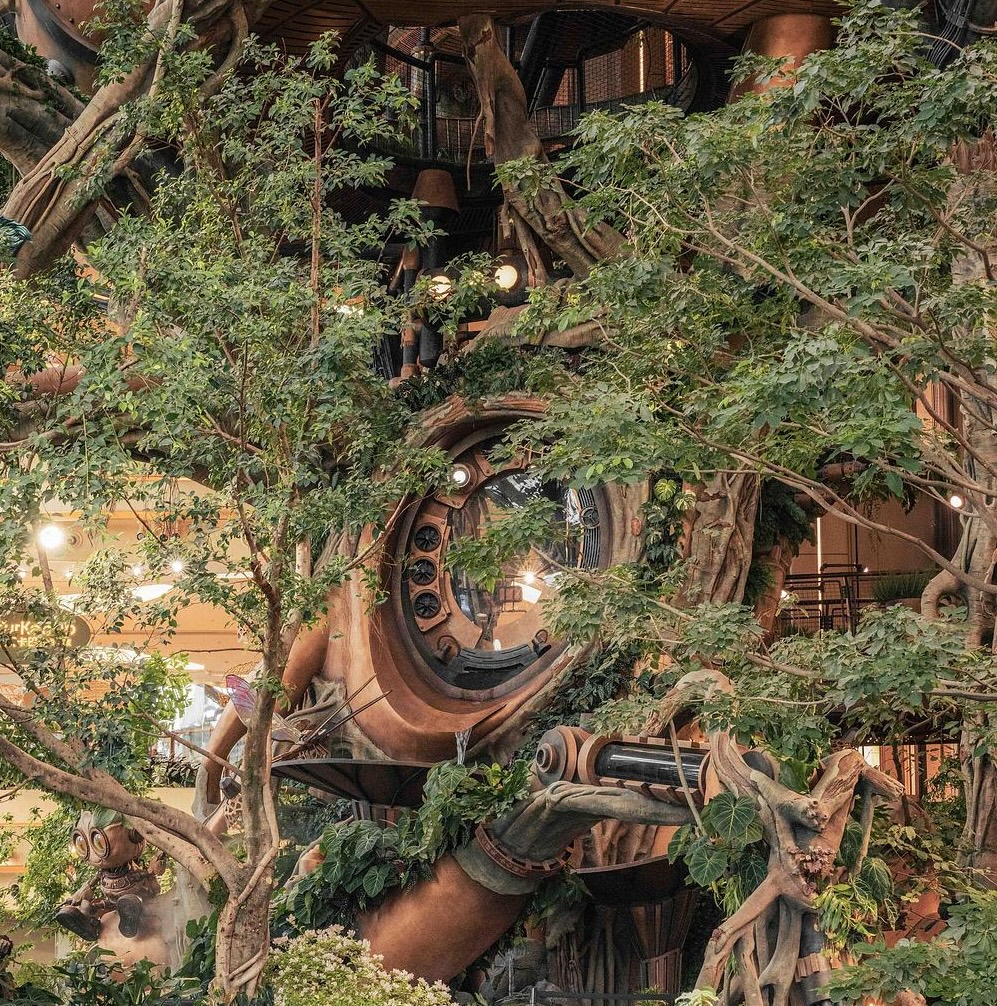
A six-metre-tall Divine Bird, inspired by the Qingluan of Eastern mythology, acts as a fictional scout responsible for environmental reconnaissance and information gathering. Together, these creatures create an imagined ecosystem in which mechanical beings and living organisms operate in symbiosis.
Architecture as an Ecological Narrative
The fantasy of Wonder Tree is supported by sophisticated engineering. Its structural system combines a central support column, mechanical roots, aerial roots, and suspended branches connected to the existing building structure. The branching network was algorithmically generated to echo natural growth patterns while satisfying structural loads, spatial requirements, and safety considerations.
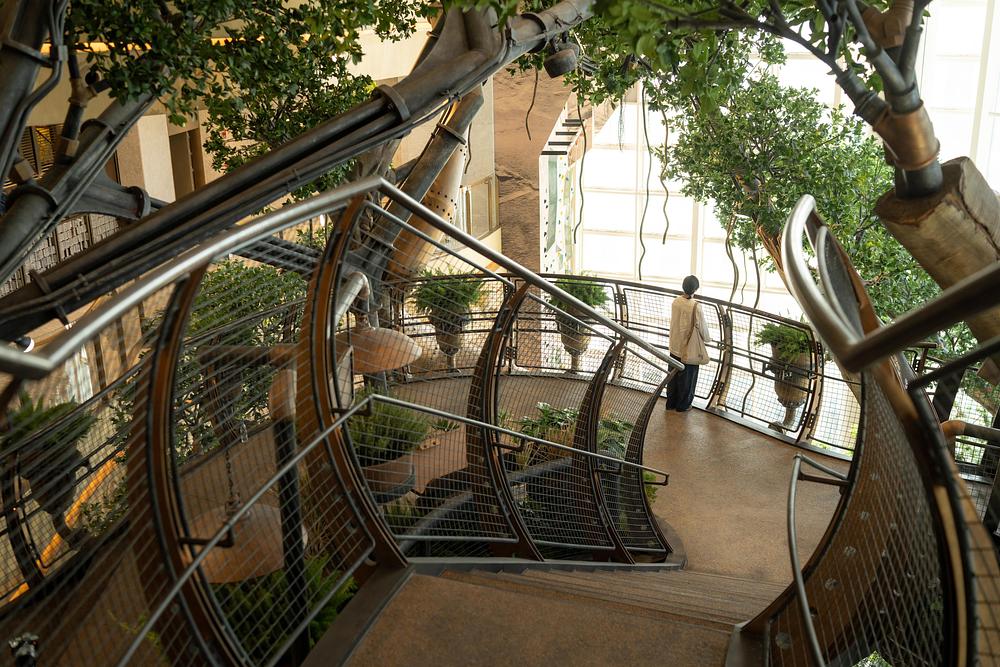
The three-dimensional planting system required close collaboration between architects, structural engineers, horticultural specialists, and landscape consultants. Plant species, irrigation, drainage, ventilation, and supplemental lighting were coordinated to create viable growing conditions within the complex interior environment.
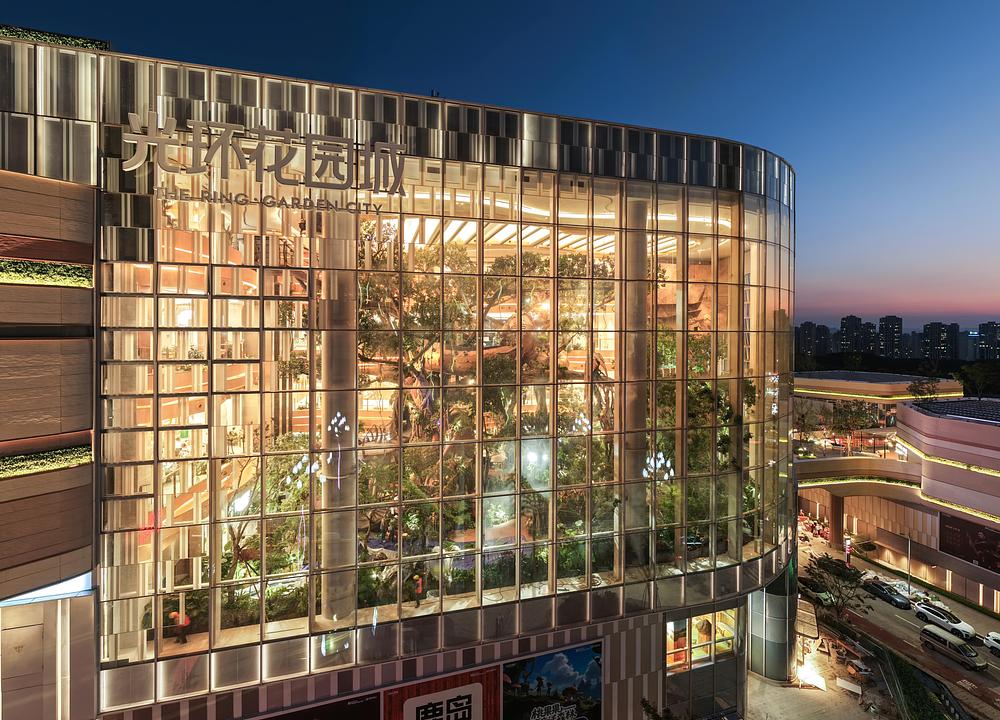
Ultimately, Wonder Tree is less a conventional landscape installation than an architectural narrative about ecological responsibility. By placing biodiversity, environmental systems, and technological innovation at the centre of a highly public commercial space, XISUI Design turns sustainability into an experience.
Its greatest achievement may be its ability to make ecological processes tangible. Seeds, water, air, plants, machinery, and people become interconnected components of one continuous system. In this imagined future, technology does not compete with nature; instead, it becomes a means of protecting, regenerating, and learning from it.
Photography: Prismlmage, Chill Shine Studio, Chen Yanzhou, Hu Yihao, Cai Jiangang, Wei Lingmo