

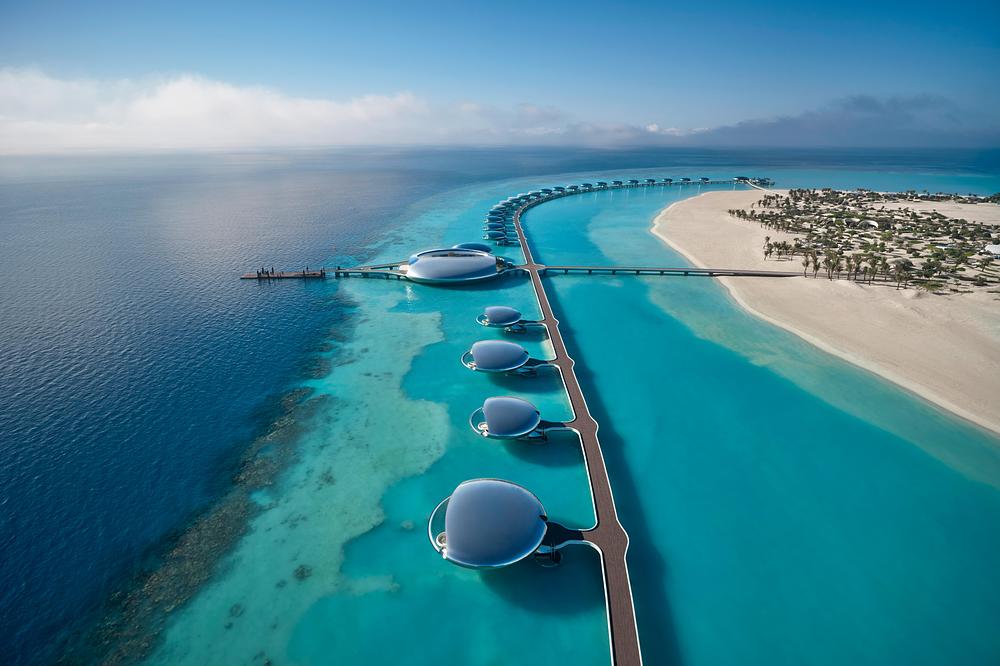
Sheybarah Island, Saudi Arabia
Killa Design
Located 25 kilometres off the Saudi Arabian coast, Shebara Resort is a 73-key hyper-luxury eco-resort designed by Killa Design and developed by Red Sea Global. Accessible only by air or water, the remote destination occupies an environmentally sensitive island characterized by dense mangroves, desert vegetation, sand dunes, turtle nesting grounds, and some of the Red Sea’s most pristine coral reefs.
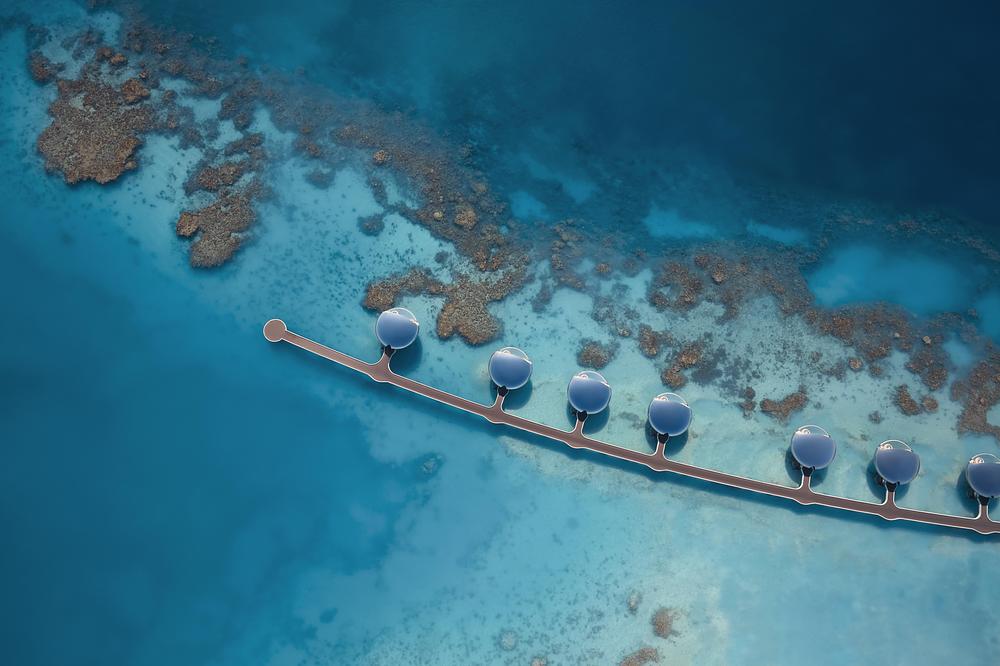
Conceived as a next-generation eco-tourism destination, Shebara demonstrates how architecture can deliver an uncompromising luxury experience while actively protecting and regenerating its natural surroundings. The project aligns with Saudi Arabia’s Vision 2030 and its ambition to establish a more sustainable future, while setting new benchmarks for environmentally responsible hospitality.
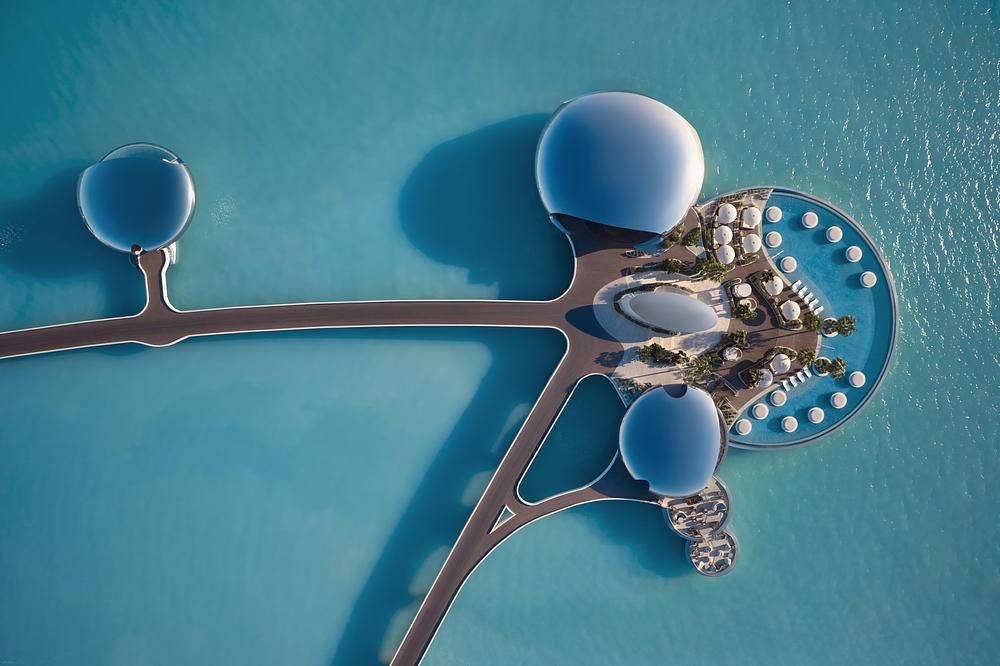
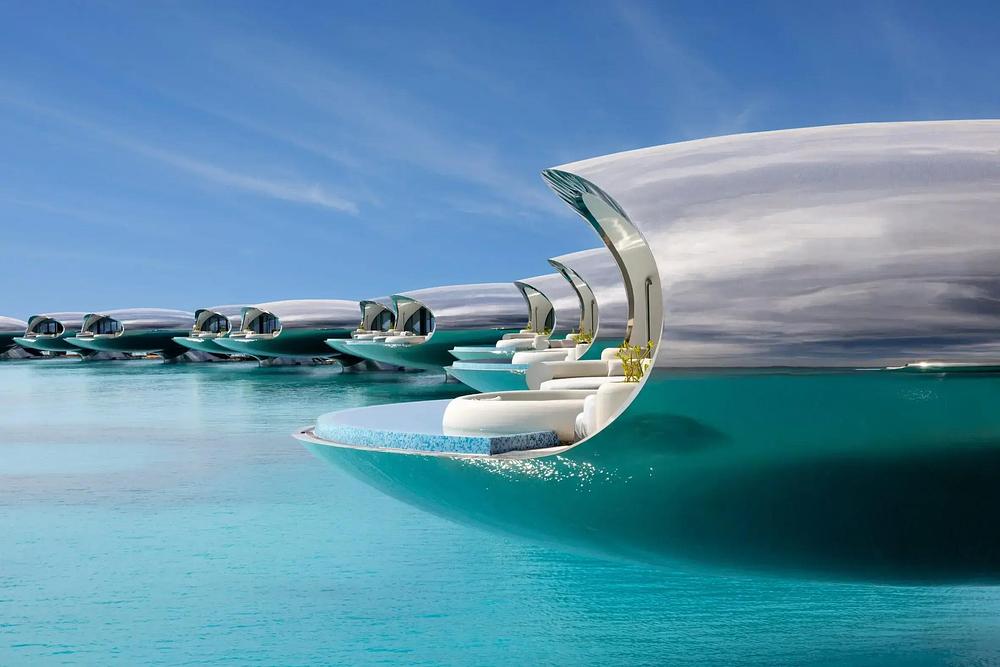
The resort’s architecture takes inspiration from the sea, with a series of reflective spherical villas appearing like a string of pearls floating across the Red Sea. Their highly polished surfaces reflect and refract the changing colours of the sky and water, allowing the structures to visually merge with the surrounding landscape. The result is an architectural intervention that is striking yet remarkably light in its relationship with the environment.

A key innovation is the project’s offshore construction strategy. Each villa was entirely constructed, fitted out, and commissioned away from the island before being transported to Sheybarah and installed as a near plug-in component of the resort’s solar-powered infrastructure. This approach significantly reduces on-site construction activity and minimizes disruption to the island, coral ecosystems, and wildlife.
The resort is designed as a self-sustaining development with an ambitious environmental agenda encompassing energy, water, waste, and transportation. Its infrastructure includes a 110,000-square-metre solar farm, desalination and reverse-osmosis facilities, sewage and water-reclamation treatment systems, recyclable materials, and native landscaping. Electric vehicles are used for land and marine transportation, further reducing the resort’s environmental impact.
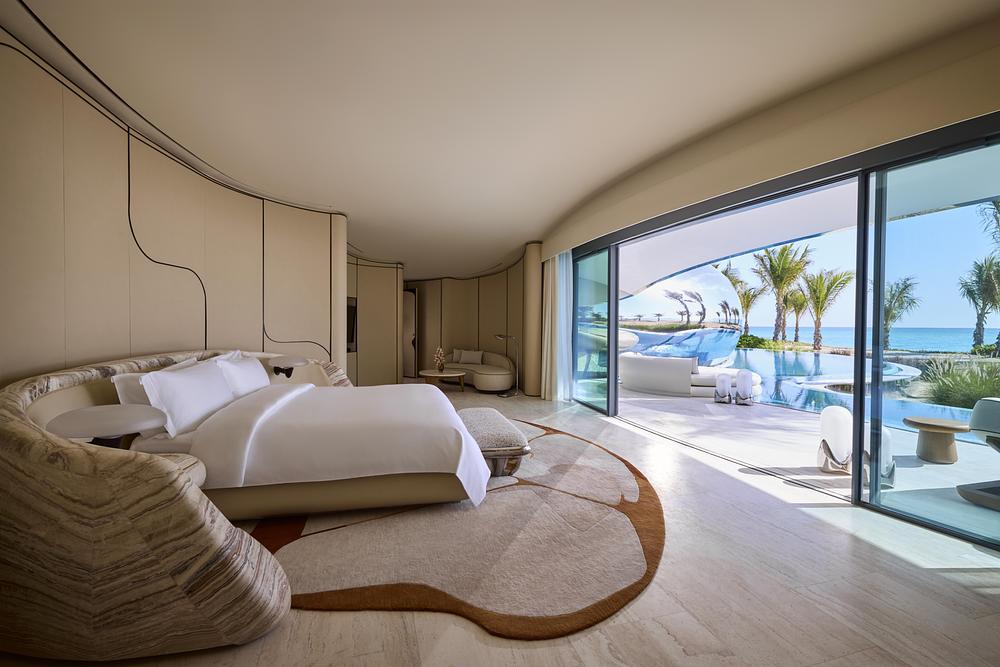
Sustainability is also integrated into the guest experience. The infrastructure itself forms part of an educational journey, allowing visitors to understand the systems and technologies that support the resort’s off-grid operations. Guests can participate in regenerative initiatives, including mangrove expansion, coral gardening, and programs designed to enhance turtle nesting habitats.
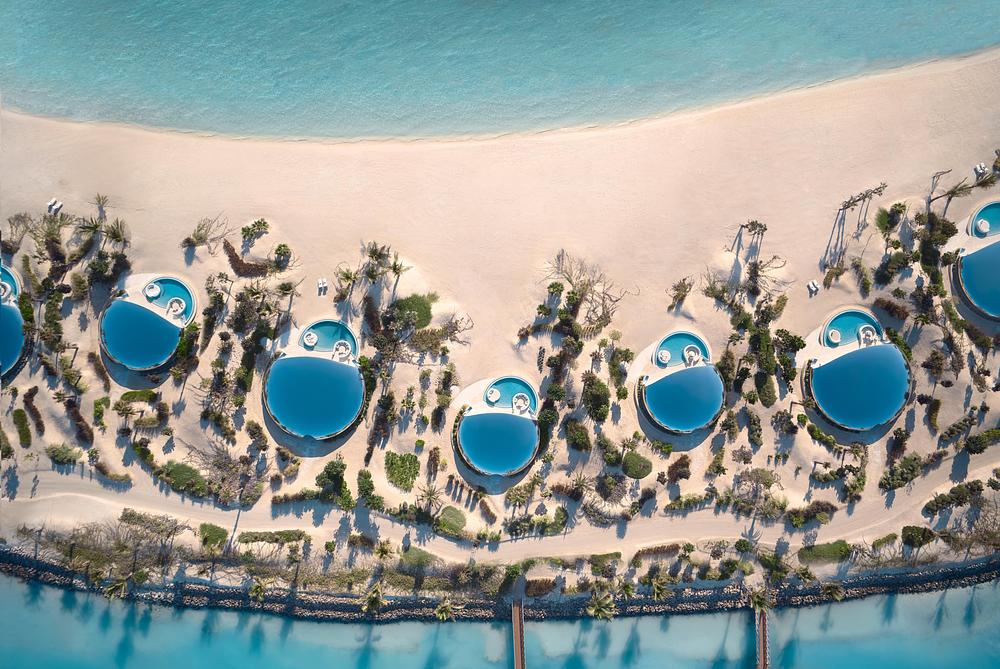
The resort’s commitment to biodiversity extends to its architectural footprint. Seeking LEED Platinum certification, the development minimizes contact with the ground by positioning accommodation above the protected lagoon and regenerative coral gardens. The villas are set back more than 50 metres from the natural coral reef, while their supporting structures create only a limited ground impact. Suspended above the marine environment, the accommodation pods provide guests with an extraordinary vantage point from which to observe the fish, birds, and turtles that inhabit the surrounding ecosystem.
Beyond environmental conservation, Shebara incorporates a broader social responsibility agenda, supporting education and employment opportunities for nearby communities while promoting greater participation and empowerment of Saudi women through its colleague programs.
Ultimately, Shebara Resort presents a compelling model for the future of luxury hospitality—one in which architecture, technology, conservation, and guest experience work together. By placing biodiversity at the centre of its design strategy, the project seeks not simply to coexist with its extraordinary setting, but to leave the surrounding marine ecosystem healthier and more resilient than before.
Sustainability Highlights: