

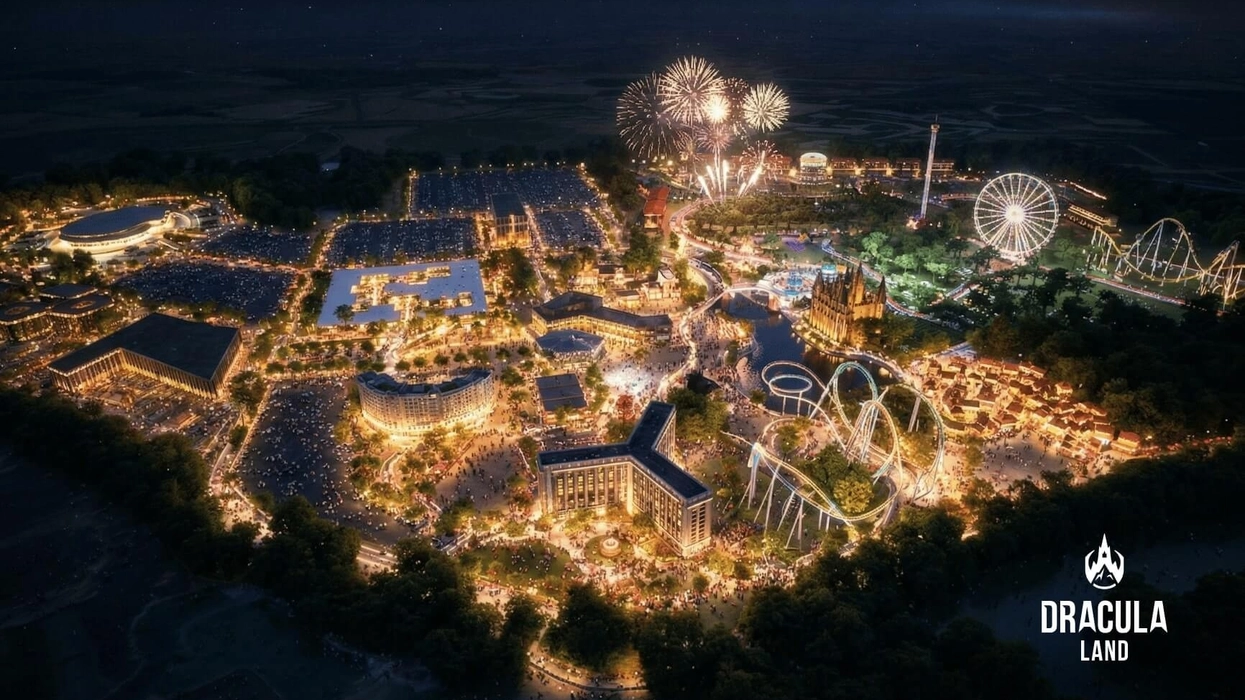
An ambitious €1 billion private investment aims to transform one of the world’s most recognizable legends into a major destination for tourism, hospitality, entertainment and technology.
Romania may soon have a new landmark on Europe’s entertainment map. DraculaLand, an ambitious development planned near Bucharest, aims to transform the internationally recognized Dracula legend into a modern entertainment destination combining tourism, hospitality, retail, sports and digital innovation.
Founded by Romanian entrepreneur Dragoș Dobrescu, the project was officially presented in December 2025, with a projected private investment exceeding €1 billion. Designed to extend across approximately 164 hectares, DraculaLand is intended to become much more than a traditional amusement park. Its vision is to create an integrated destination capable of attracting international visitors, hosting major events and generating economic opportunities throughout the year.
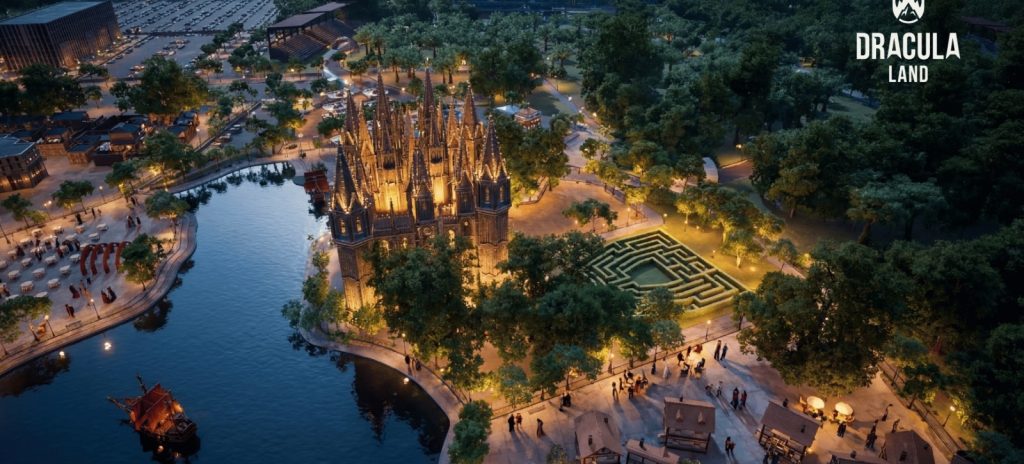
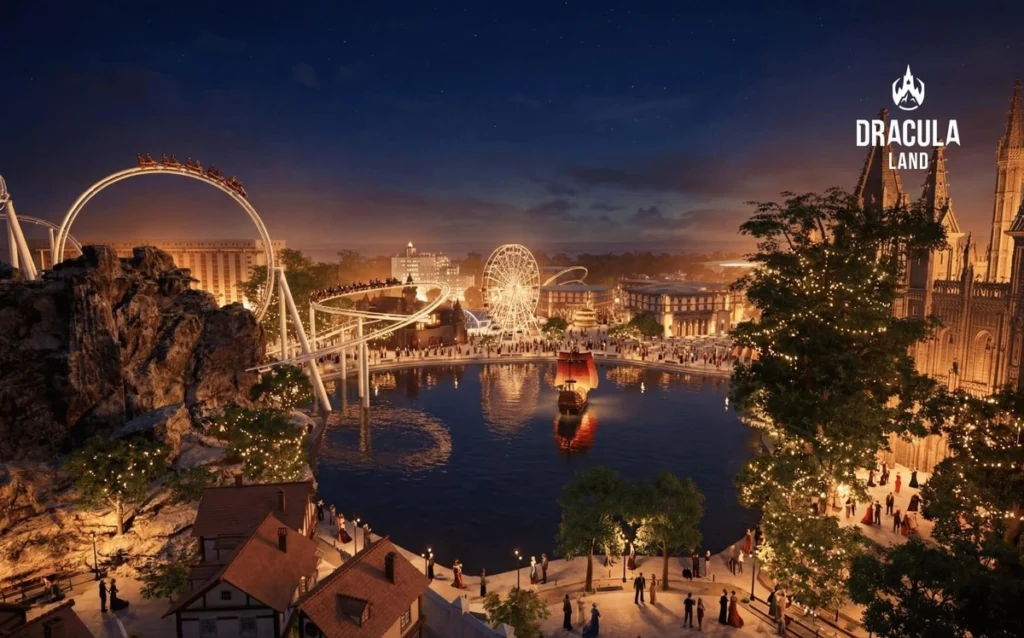
A destination with multiple attractions
Located in the Gherghița area, near the A3 motorway, the development benefits from its proximity to Bucharest and Henri Coandă International Airport. According to the project presentation, the site is approximately 20 minutes from the capital and 15 minutes from the airport, offering convenient access for both domestic and international visitors.
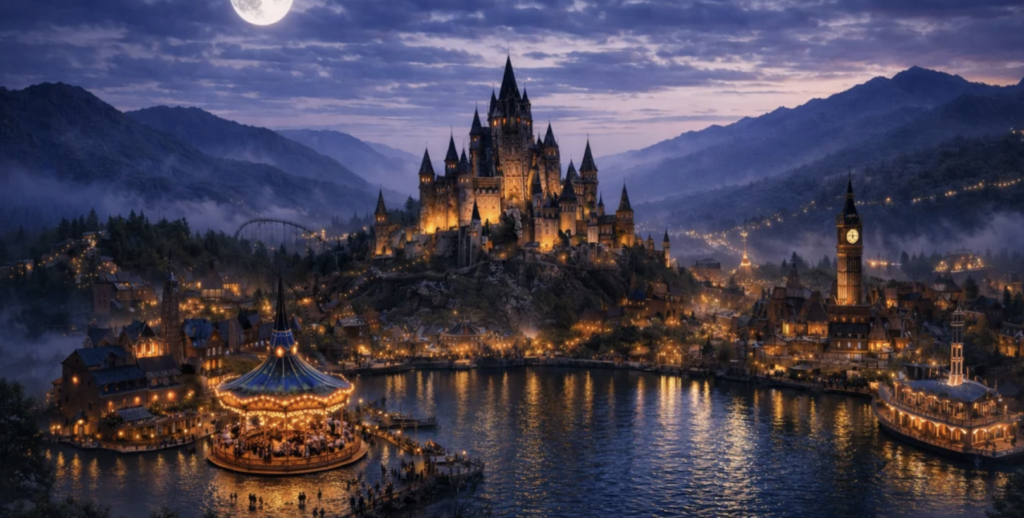
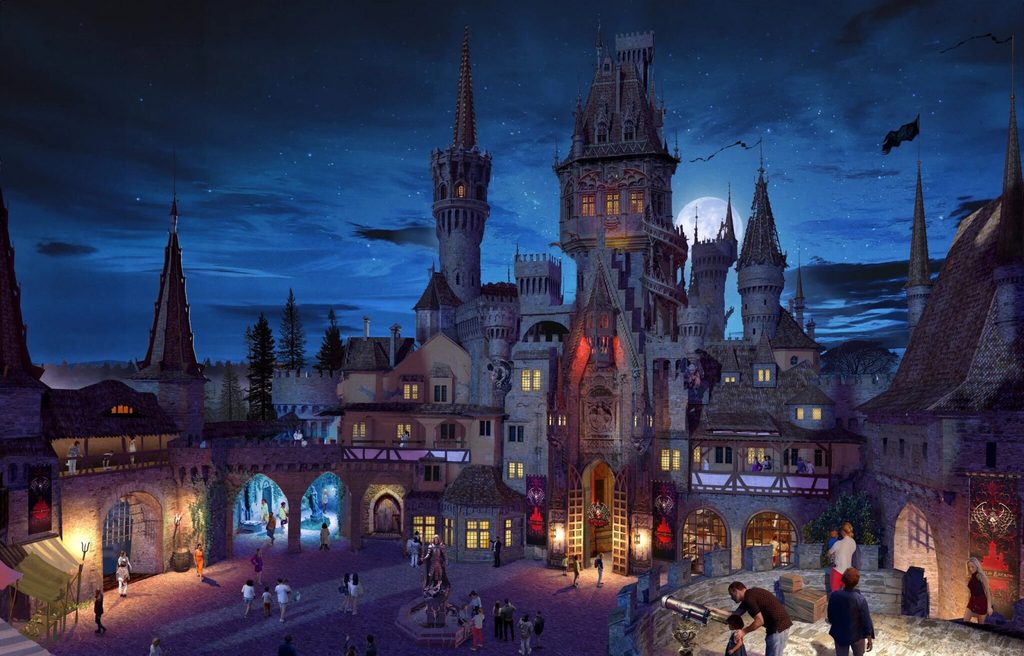
At the heart of the development will be DraculaLand Theme Park, featuring six immersive themed zones and more than 40 major attractions. The concept combines the mythology surrounding Dracula with modern storytelling, advanced technology and interactive experiences.
However, the entertainment offering extends considerably beyond the theme park.
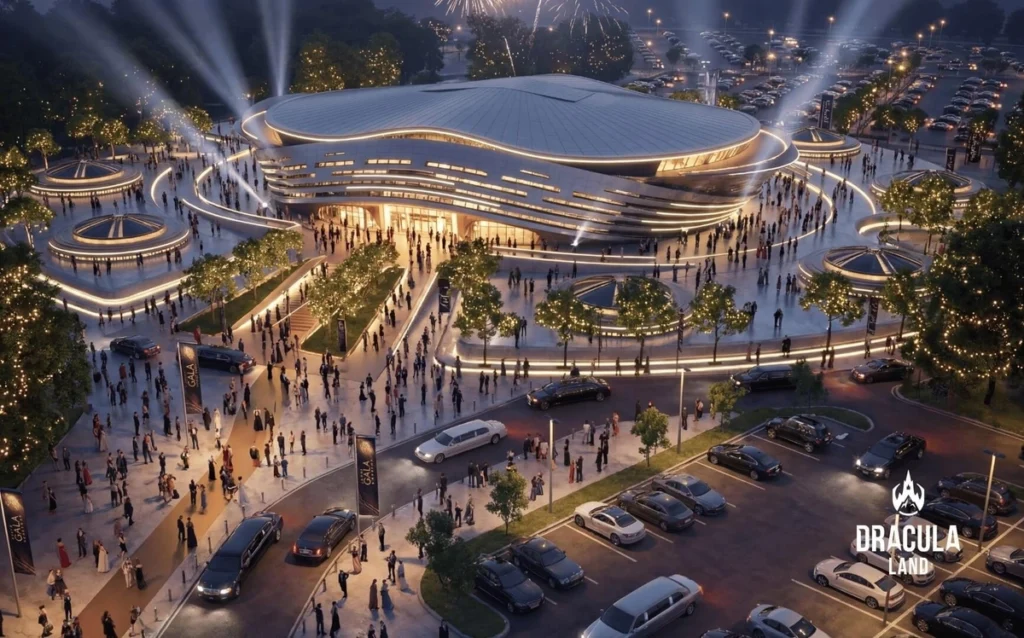
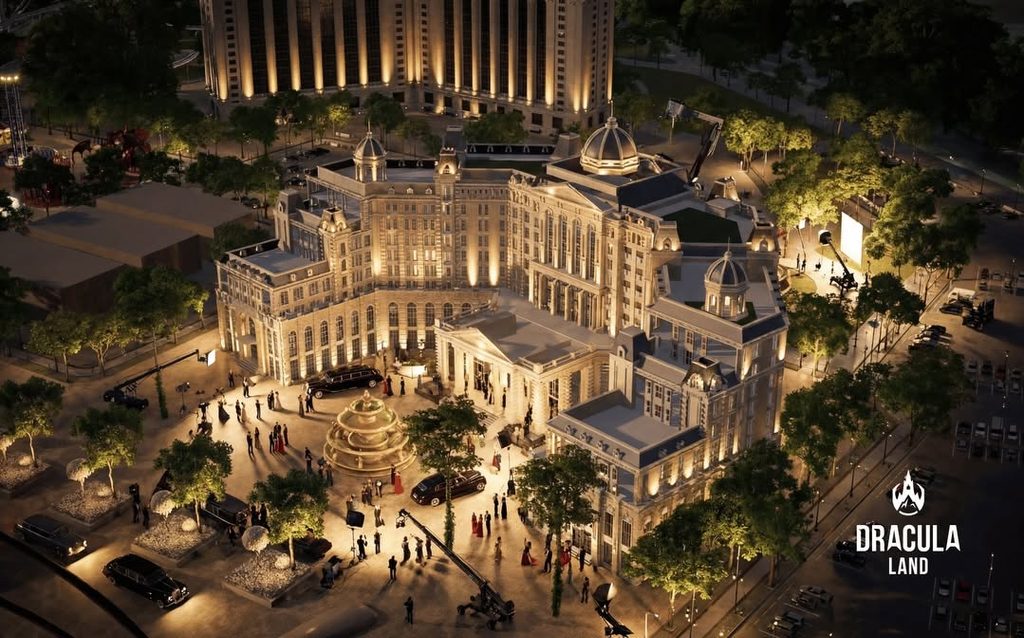
The master plan includes a multifunctional arena with approximately 22,500 seats, designed to host international concerts, festivals, sporting competitions and esports events. A luxury fashion and home-decoration outlet, developed with international retail specialists, is also planned, alongside restaurants and commercial spaces.
Water-based entertainment will be another major component. The proposed Aqua Park and Thermal Spa will cover approximately 50,000 square metres and include more than 30 attractions, including a large wave pool.
Hospitality at the centre of the experience
For Romania’s hospitality industry, one of the most significant aspects of DraculaLand is its accommodation component.
The development plans three themed hotels, with a combined capacity of approximately 1,200 rooms, alongside conference facilities and premium services. The intention is to encourage visitors to stay longer rather than treat the attraction as a single-day excursion.
This approach could create opportunities for hotel operators, restaurant businesses, food and beverage suppliers, event organizers and other hospitality service providers.
The project also includes a 4.5-kilometre racing circuit and a business accelerator and technology hub dedicated to gaming, artificial intelligence and digital creative industries.
A project with international ambitions
DraculaLand brings together Romanian developers and international specialists in architecture, attraction design, retail, engineering, finance and legal consulting. Its ambition is to establish a destination that can compete with established European entertainment complexes while creating a distinctive identity rooted in Romanian mythology.
The economic expectations are equally ambitious. Initial project announcements have referred to approximately three million visitors annually and more than 5,000 direct and indirect jobs. These figures represent projected targets rather than established results, and their achievement will depend on successful financing, construction, operations and international market demand.
In an October 2026 update, the project confirmed that its master plan had been completed, engineering and infrastructure preparations had advanced, and discussions with international operators, investment funds and private investors were continuing. Construction preparations are under way.
An opportunity for Romanian tourism
DraculaLand raises an important question: can Romania turn its cultural heritage and internationally recognized identity into a sustainable, world-class tourism product?
The Dracula legend has enormous international recognition, but Romania has not yet fully capitalized on its commercial and cultural potential. A successful development could help strengthen the country’s visibility, encourage longer stays and create new reasons for international travellers to include Romania in their European itineraries.
Beyond its entertainment attractions, the project’s real significance may lie in its ability to connect tourism, hospitality, technology and business within one integrated destination.
For Romania’s hospitality sector, DraculaLand represents a potentially important new chapter. If successfully delivered, it could create opportunities for businesses, attract international investment and demonstrate that Romanian identity can become the foundation of a contemporary global destination.
The legend of Dracula has travelled around the world for generations. DraculaLand now aims to bring that legend home.