

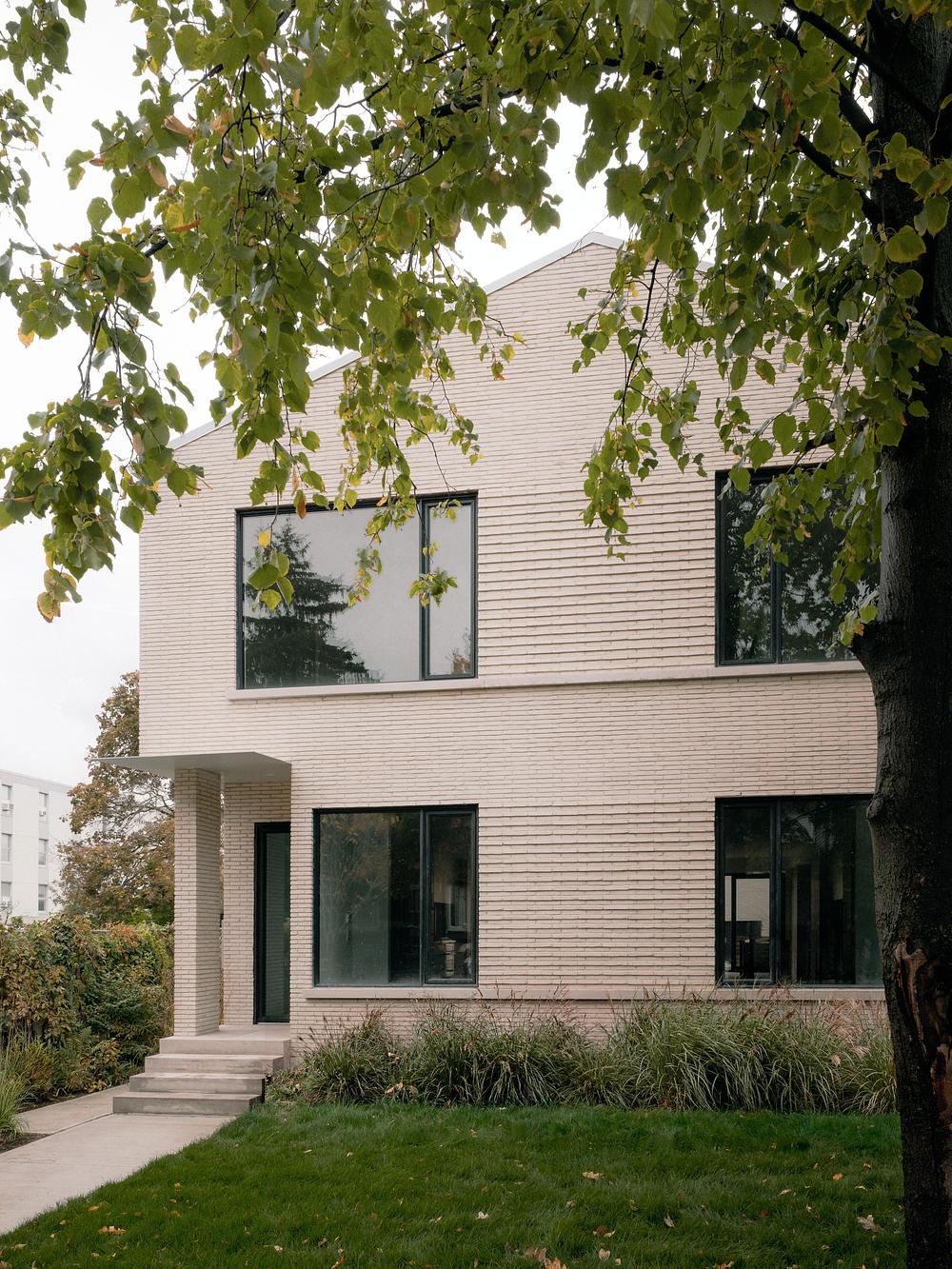
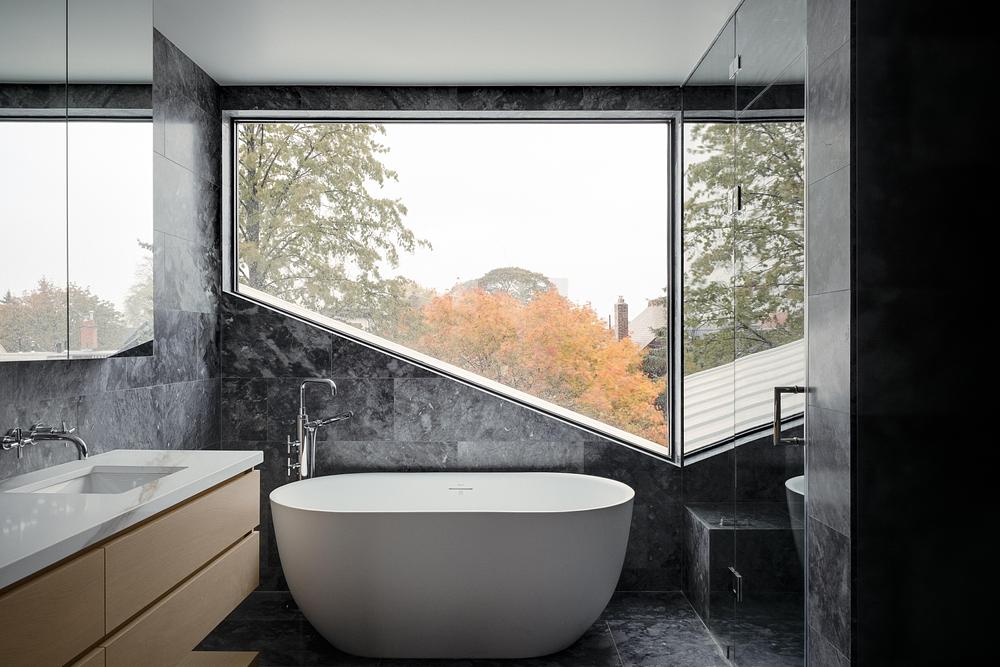
Located in a low-rise residential neighbourhood in Toronto, this six-unit rental housing project spans two lots and explores the architectural potential of incremental density through a carefully composed group of buildings. The development consists of two semi-detached multiplexes facing the street and two semi-detached laneway houses at the rear of the site, oriented towards Bickford Park.
The street-facing buildings are conceived as a single gabled form, drawing from the character of the surrounding residential context. The pitched roof acts as a regulating device, accommodating additional program within a familiar silhouette while maintaining the rhythm and scale of neighbouring houses.
Belgian buff brick wraps the primary elevations, creating material continuity and a sense of permanence. Window openings are carefully proportioned and detailed with limestone sills, while patterned brickwork between the main openings introduces depth and shadow across the façades. Entrances are clearly defined, yet restrained, reinforcing a calm residential presence along the street.
At the rear of the site, the laneway houses complete the composition. Though smaller in scale, their massing and proportions closely align with those of the street-facing buildings, allowing the project to read as a unified architectural ensemble. Their orientation toward the laneway reimagines it as a shared front-yard condition connected to the park, rather than as a residual service space shaped primarily by vehicles.
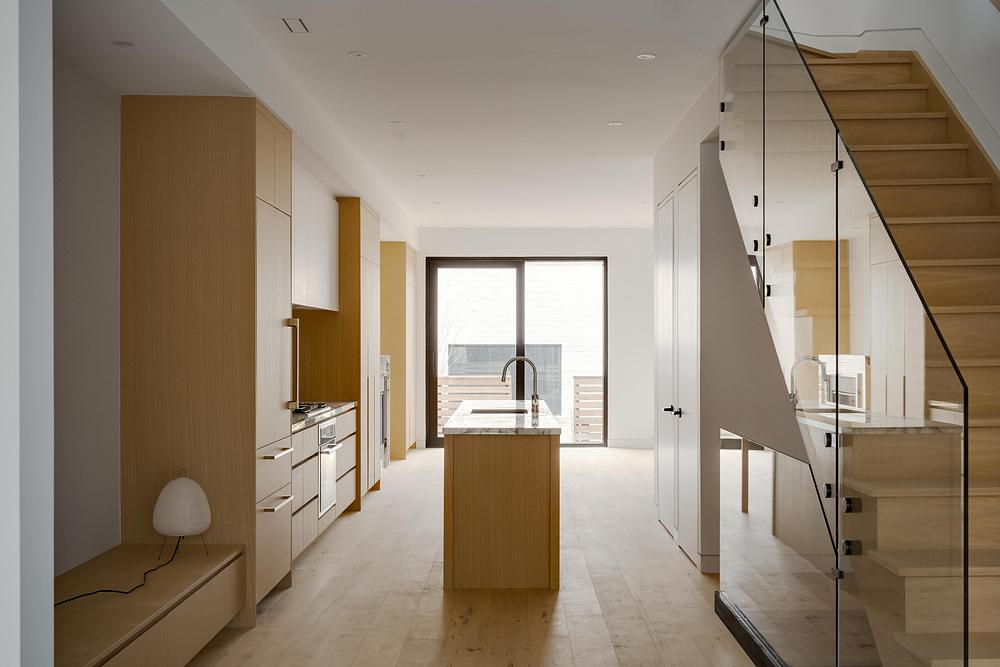
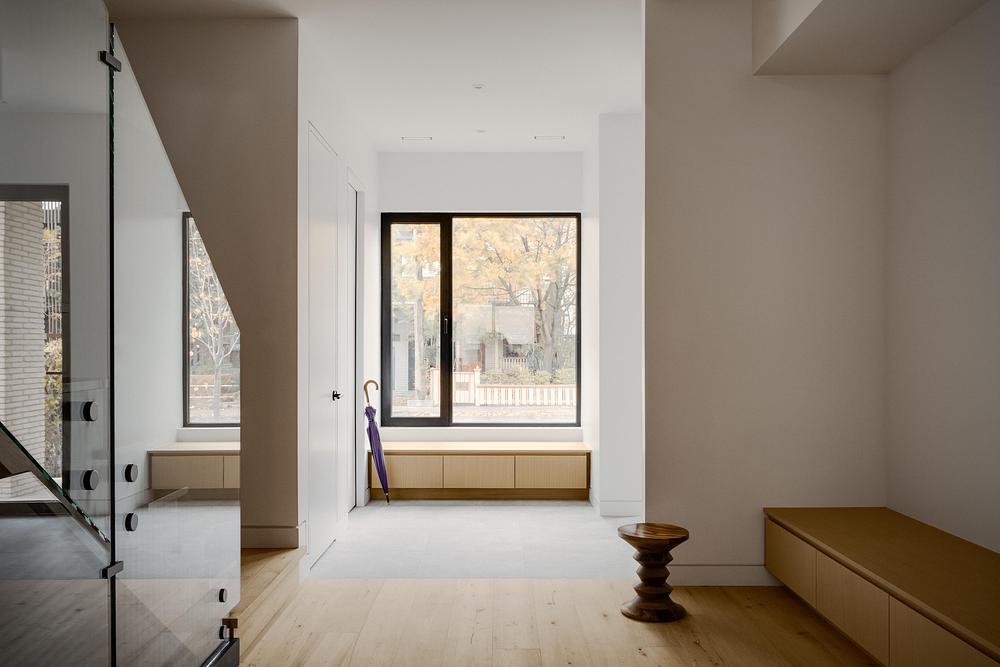
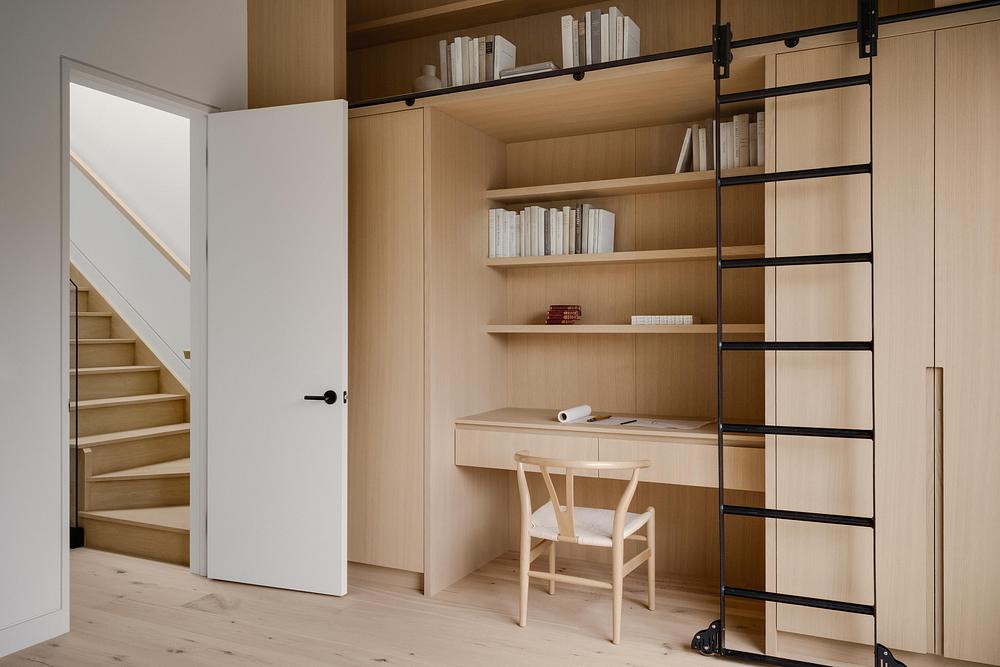
The interior spaces, designed in collaboration with Unison Group, are defined by a reductive and warm material palette of light oak flooring and full-height millwork. Large floor-to-ceiling sliding doors dissolve the boundary between living spaces and outdoor terraces, bringing natural light deep into the open-plan interiors. A central staircase enclosed with glass balustrades anchors the plan and enhances visual continuity between levels. On the second floor, the full volume of the gabled roof is used to create a double-height library. This contemplative space incorporates a custom built-in desk and upper shelving accessed by a rolling ladder, transforming the building’s profile into a distinct spatial experience.
The project takes shape within a shifting policy framework that has expanded the capacity of Toronto’s low-rise neighbourhoods to accommodate additional density. Rather than treating these changes simply as a matter of compliance, the design uses the flexibility of contemporary planning and zoning regulations to test a more nuanced architectural response. Density is integrated through continuity of form and material, demonstrating how regulatory change can be translated into built work that reinforces neighbourhood character, while broadening the range of housing types available in the city.
Project Name: Montrose Sixplex
Year Completed: 2026
Location: Toronto, Ontario
Project Type: Multi-Unit Housing
Architect: Gabriel Fain Architects
Interior Design: Unison Group
Construction Management: Reside Properties
Photos: Felix Michaud