

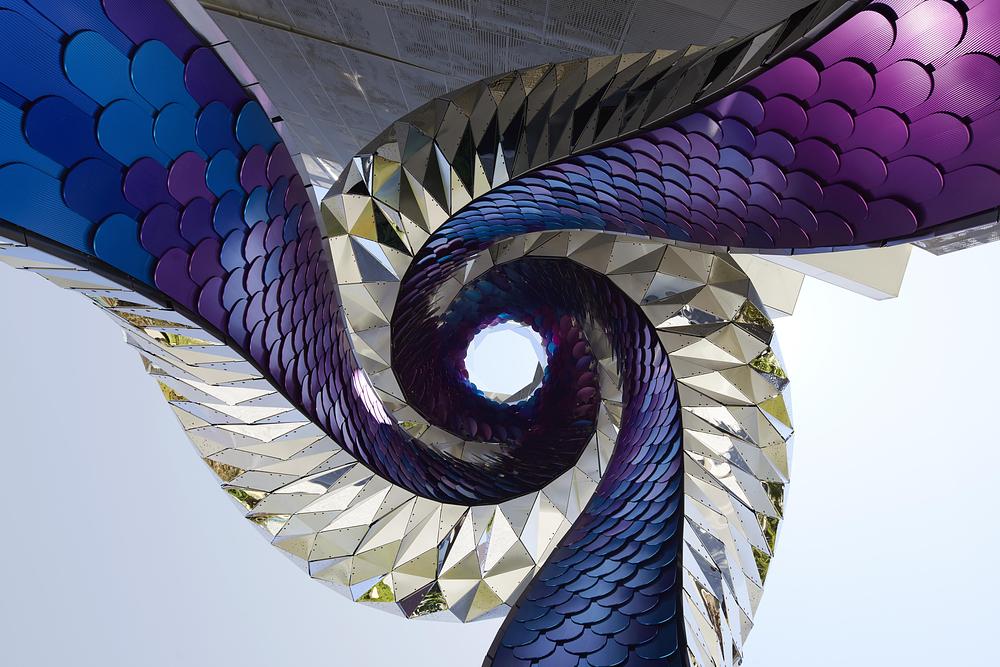
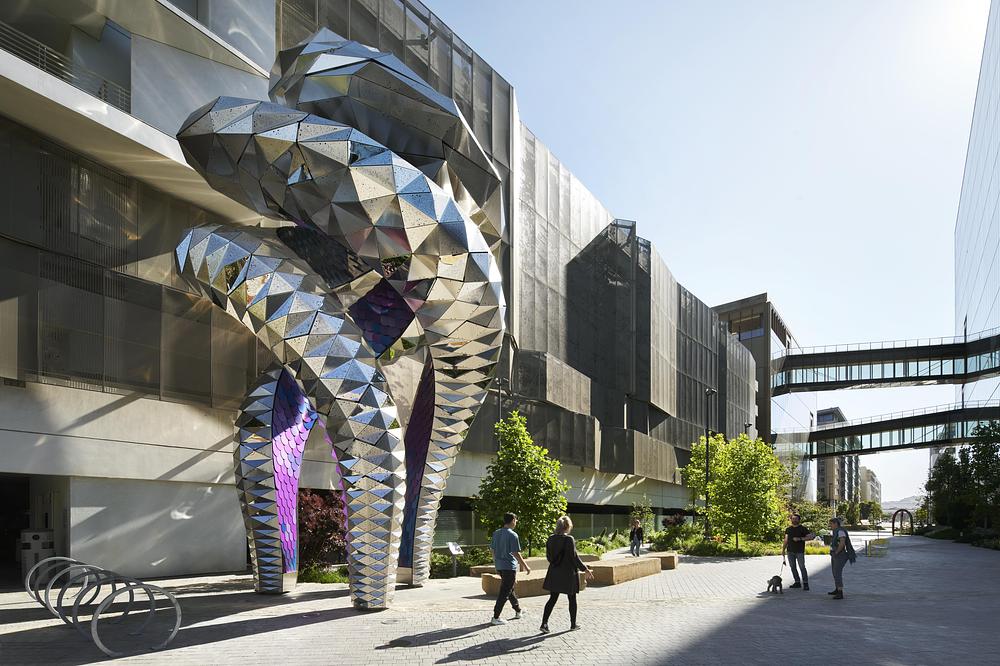
Award-winning design studio FUTUREFORMS has established a distinctive reputation for transforming public spaces through installations that blur the traditional boundaries between public art and architecture. Based in the San Francisco Bay Area, the studio explores how emerging technologies and computational processes can shape new kinds of urban experiences. Their work demonstrates how art, architecture, and digital tools can come together to create environments that are both visually striking and deeply interactive.
In an increasingly digital world, the definition of public art and architecture is rapidly evolving. Contemporary cities are no longer shaped solely by physical materials like concrete, steel, and glass. Instead, they are increasingly influenced by the invisible systems of data, algorithms, and digital infrastructure that guide everyday life. Within this context, a new design philosophy—often described as Digital Craft—is emerging. Digital Craft treats computation not as a replacement for human creativity but as an extension of it. By using algorithms as tools similar to those of traditional artisans, designers can create highly customized, site-specific works that move beyond the standardized forms produced by industrial manufacturing.
Through this approach, architecture becomes more dynamic and responsive. Rather than existing as static monuments, structures can behave like living participants in the urban environment—reacting to light, weather, movement, and human interaction. The result is a new kind of built environment that encourages exploration, curiosity, and public engagement.

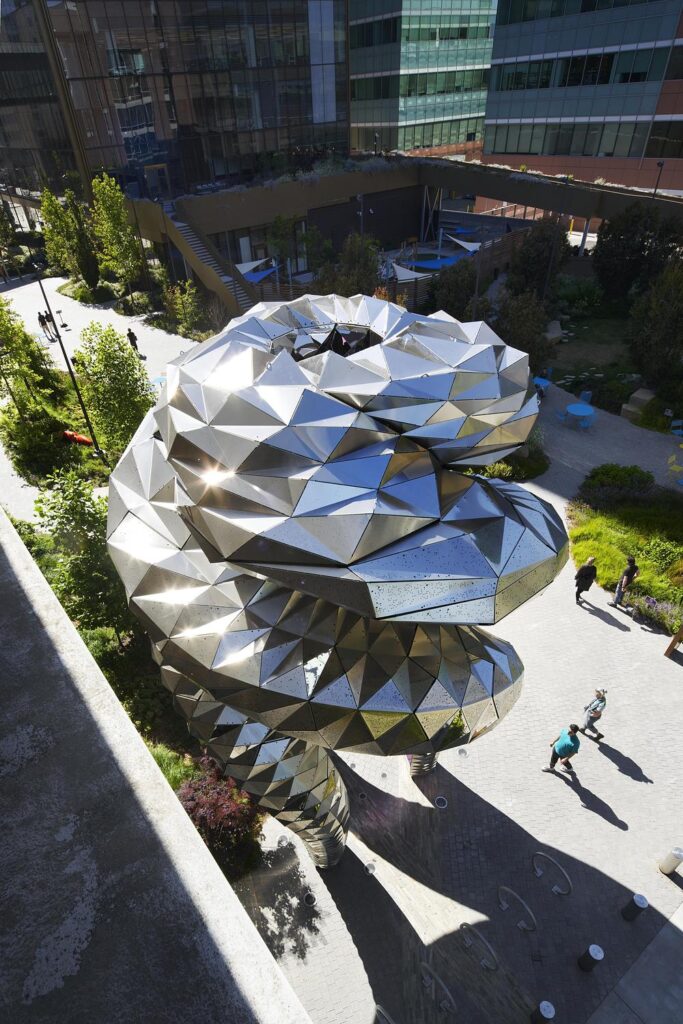
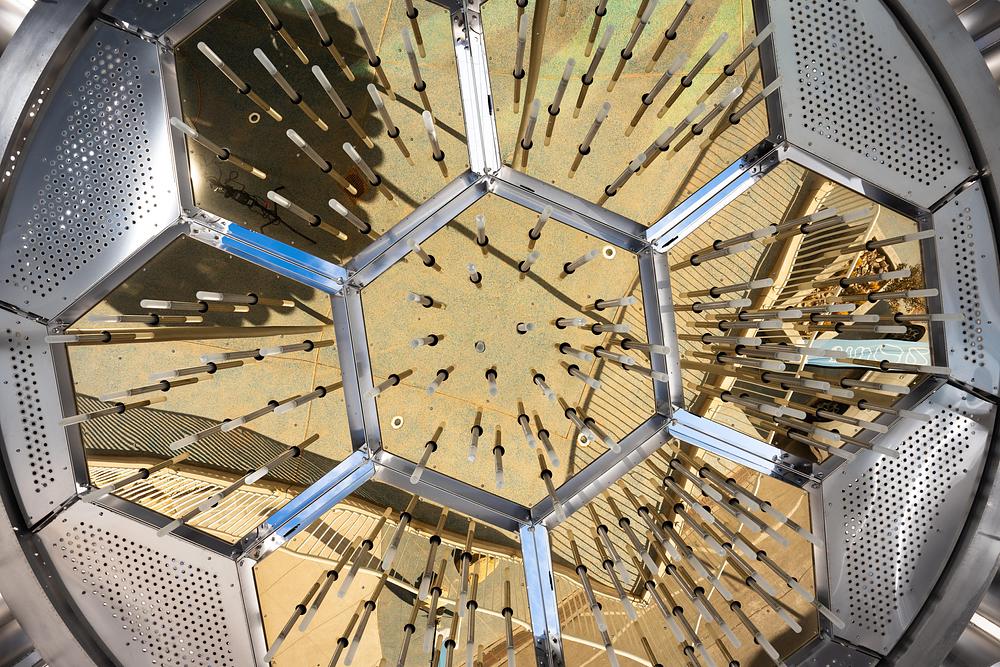
Inside, however, the experience transforms dramatically. Visitors step into a glowing, immersive interior space that the designers describe as a “Creature of the Garden.” This inner chamber provides a quiet, almost otherworldly refuge within the dense urban setting, demonstrating how digital design can produce environments that are both monumental and intimate.
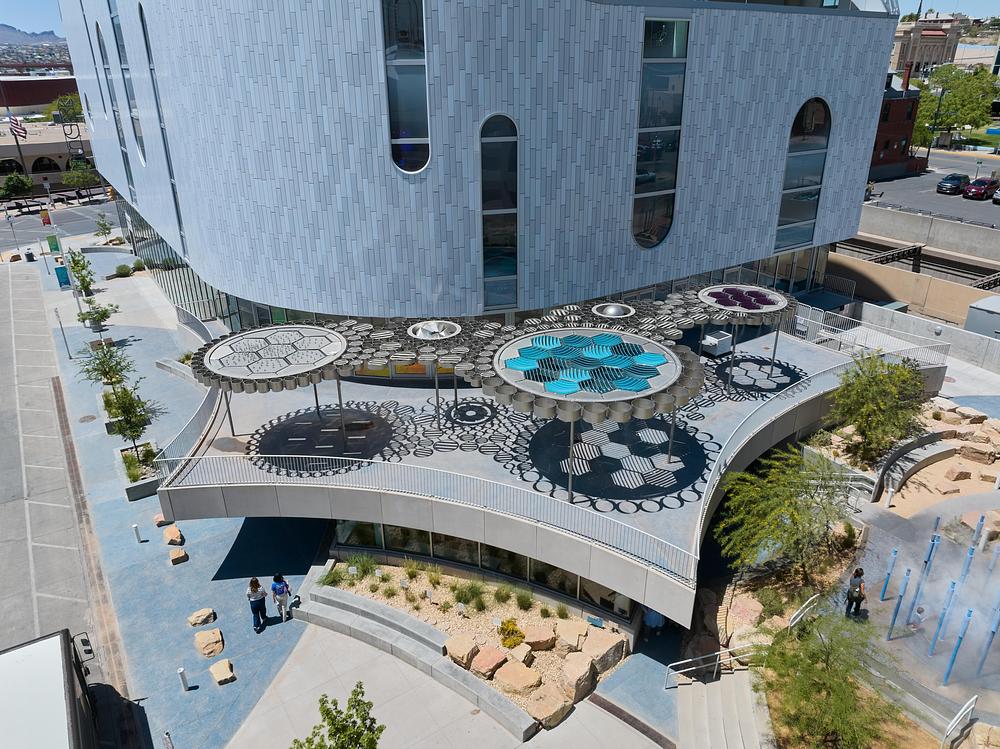
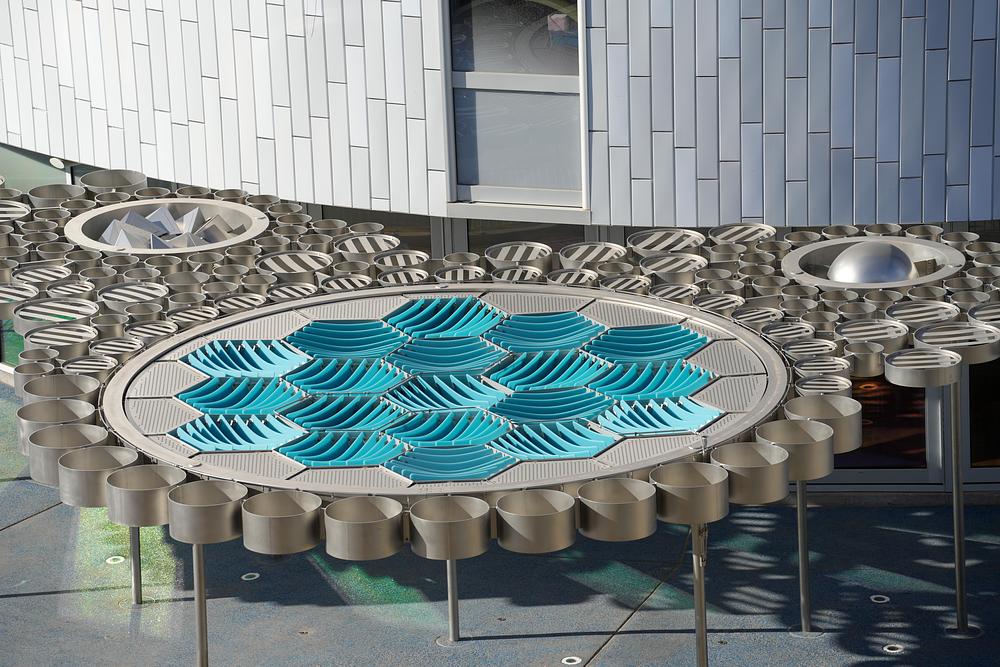
Another notable project, Weatherscape, was recently completed in El Paso, Texas, as part of the new El Paso Children’s Museum—known locally as “La Nube.” Measuring approximately 70 by 40 feet, the installation functions as a sculptural canopy that goes far beyond the role of a typical shade structure. Instead, Weatherscape operates as an interactive environmental system designed.
The title Metaxis comes from a Greek word that describes a state of “in-betweenness”—belonging to two realms at the same time. The exhibition reflects this concept by presenting a wide range of experimental artifacts created by the studio between 2015 and 2025. More than twenty models, 3D-printed prototypes, and conceptual studies fill the gallery, offering insight into how FUTUREFORMS moves from early speculation to built reality.
By showcasing prototypes alongside completed works, METAXIS reveals how FUTUREFORMS integrates knowledge from multiple disciplines—including art, architecture, and computational design—to imagine new possibilities for the built environment. The exhibition ultimately highlights how digital tools, when combined with artistic vision, can reshape the way we conceive, design, and experience the cities of the future.
Photos credit: Matthew Millman