

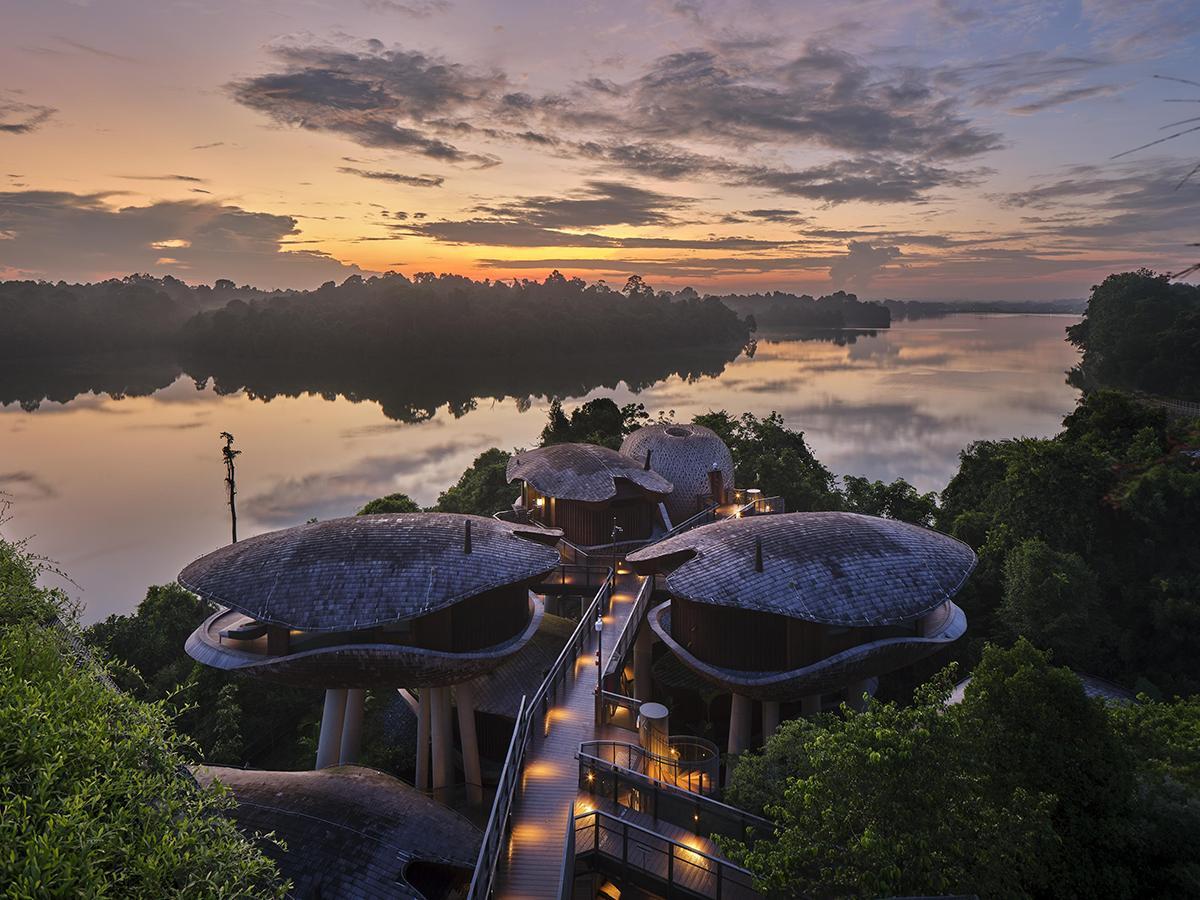
Singapore’s journey from a Garden City to a City in Nature finds bold expression in the Mandai Eco-Resort. Conceived through a government-initiated competition, the winning design proposed a regenerative resort that is sensitively inserted into Singapore’s nature reserve around the Mandai Wildlife Parks.
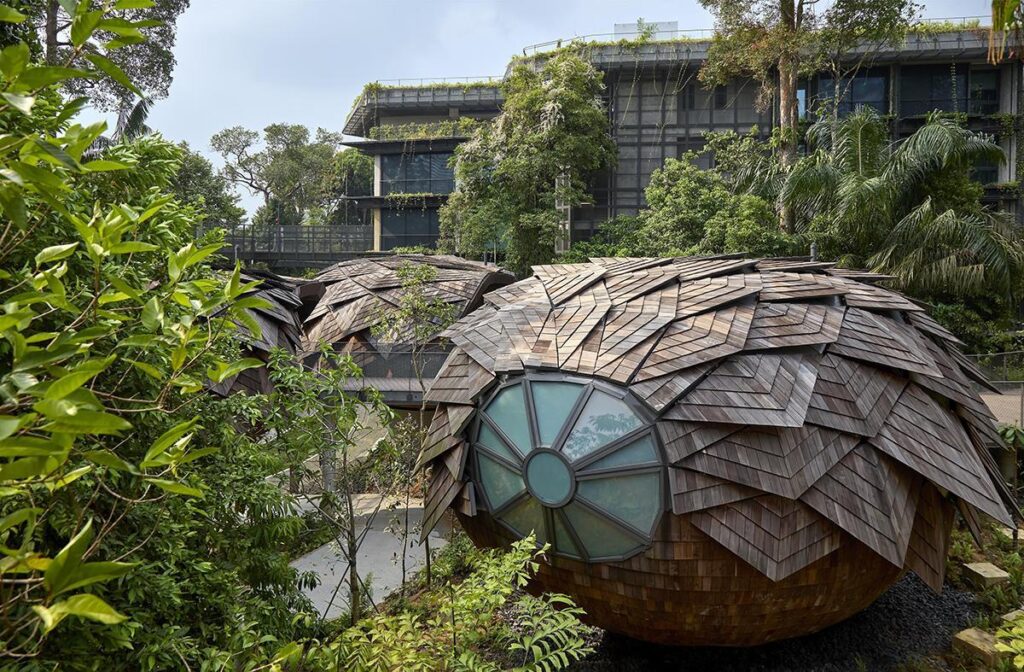
The architecture not only blends into the jungle—but enhances it. By inverting the traditional Zoo paradigm, rather than separating guests from nature and wildlife, the resort reimagines the relationship: humans become part of the jungle ecosystem, learning to coexist harmoniously with native flora and fauna.
The 4.6-hectare site for the 338-key resort previously housed the Singapore Zoo’s back-of-house facilities. The building mass is carefully integrated into the site, enriched through the replanting of native tree species felled during construction. Inspired by the Liana vine, the branching building form meanders through the forest, designed with no fixed façade, blending architecture and ecology into one living, breathing organism.
The 4.6-hectare site for the 338-key resort previously housed the Singapore Zoo’s back-of-house facilities. The building mass is carefully integrated into the site, enriched through the replanting of native tree species felled during construction. Inspired by the Liana vine, the branching building form meanders through the forest, designed with no fixed façade, blending architecture and ecology into one living, breathing organism.
The resort achieves a 40% reduction in energy consumption compared to typical benchmarks. This was made possible through an integrated environmental strategy that includes naturally ventilated corridors and lobbies, mixed-mode air conditioning in guestrooms, solar panel integration, and the use of Passive Displacement Ventilation (PDV) in the Treehouses—where chilled air circulates silently and efficiently without the need for conventional compressors.
The resort achieves a 40% reduction in energy consumption compared to typical benchmarks. This was made possible through an integrated environmental strategy that includes naturally ventilated corridors and lobbies, mixed-mode air conditioning in guestrooms, solar panel integration, and the use of Passive Displacement Ventilation (PDV) in the Treehouses—where chilled air circulates silently and efficiently without the need for conventional compressors.
Architecture and landscape
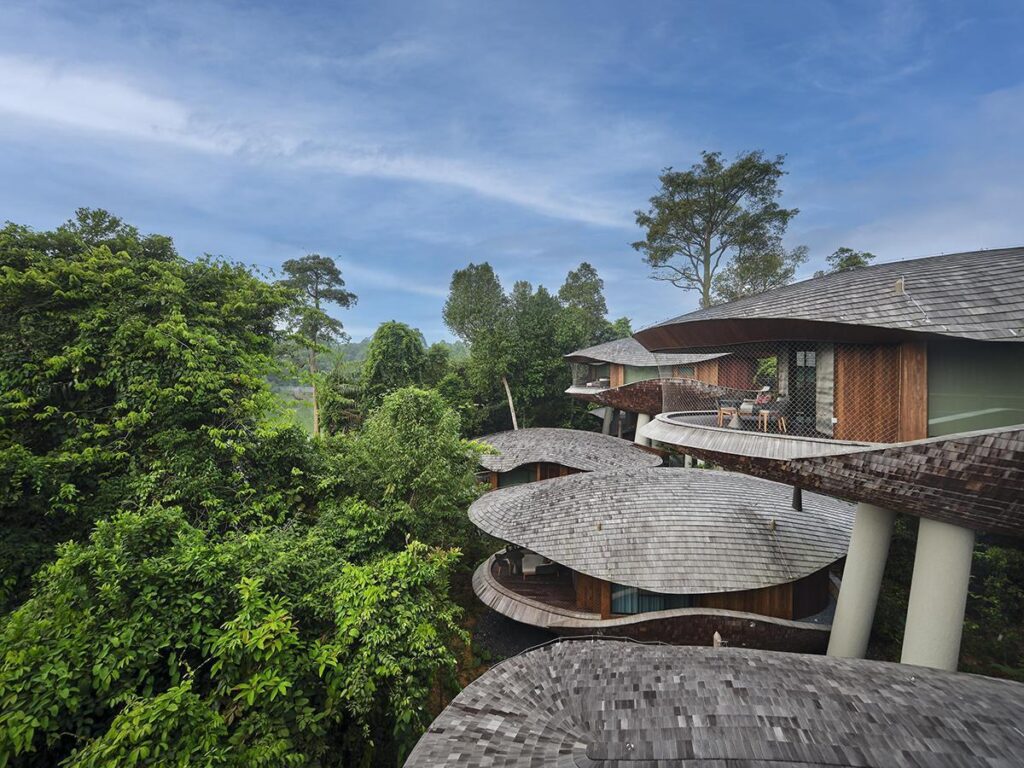
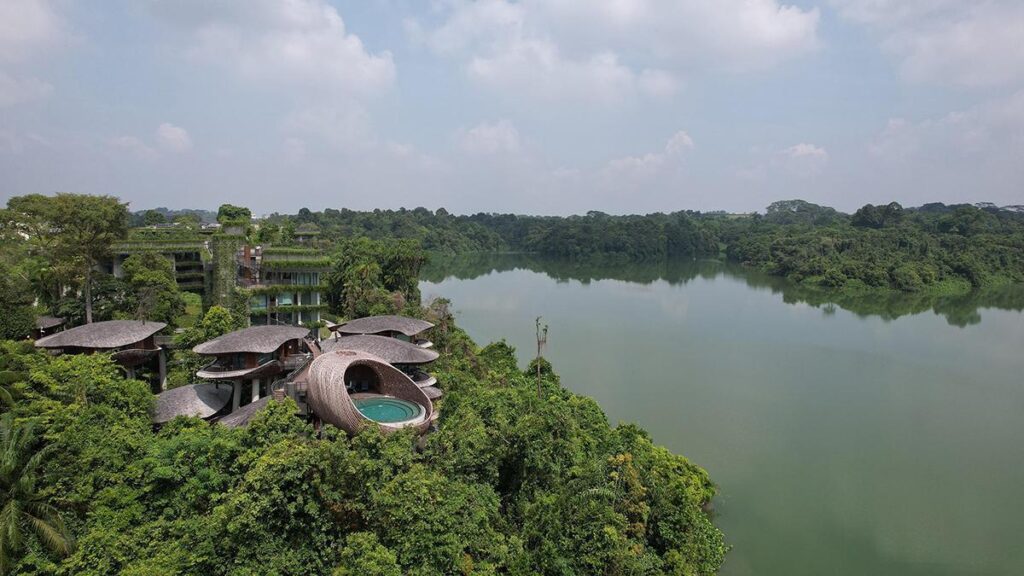
The concept is sympathetic to the existing vegetation and tree lines, as well as natural topography. Wherever possible, the resort is elevated several meters above the ground, allowing native wildlife to move across the site. It is also designed to be unobtrusive, sitting below the upper canopy layer of the surrounding trees.
The branching form of the 4-5 storey main guest wings meander through the jungle, while treehouses shaped like seed pods are tucked neatly in between existing trees and are linked by jungle pathways or an elevated walkway.
In addition to extensive planting at the roof and façade of the resort buildings, more than half the trees on the site will be retained, of which 40% are of conservation value. The re-greening effort will enhance the site’s biodiversity through thoughtful planting strategies that will both promote native species on the site of the resort and double the number of trees from today.
Interior design
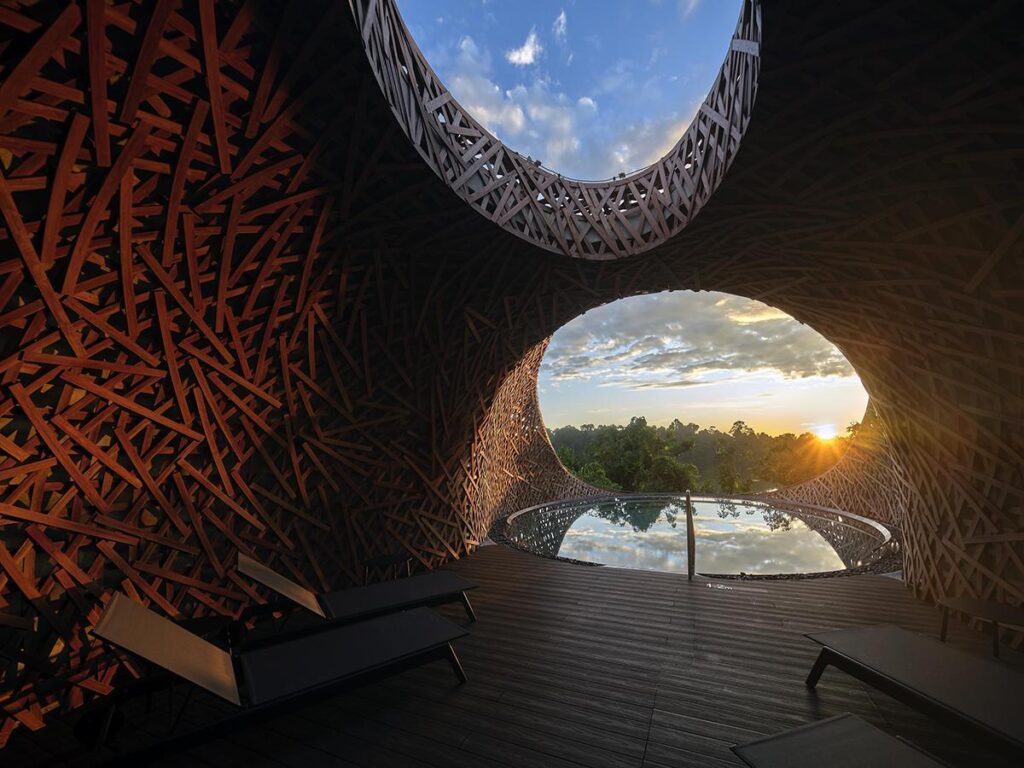
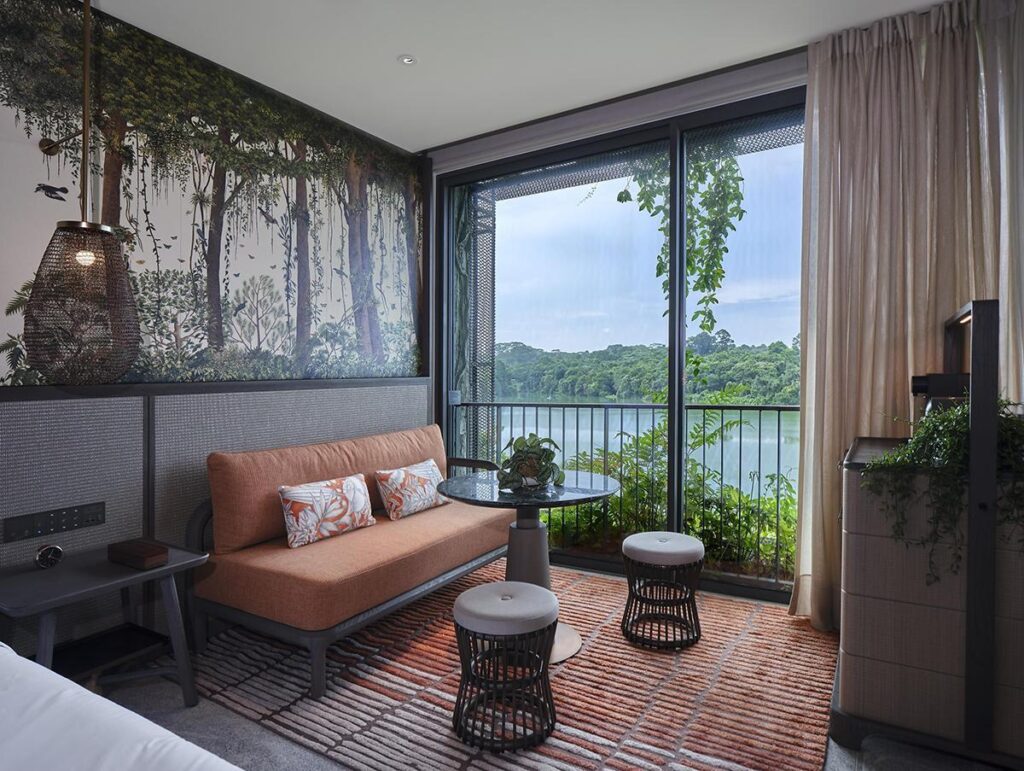
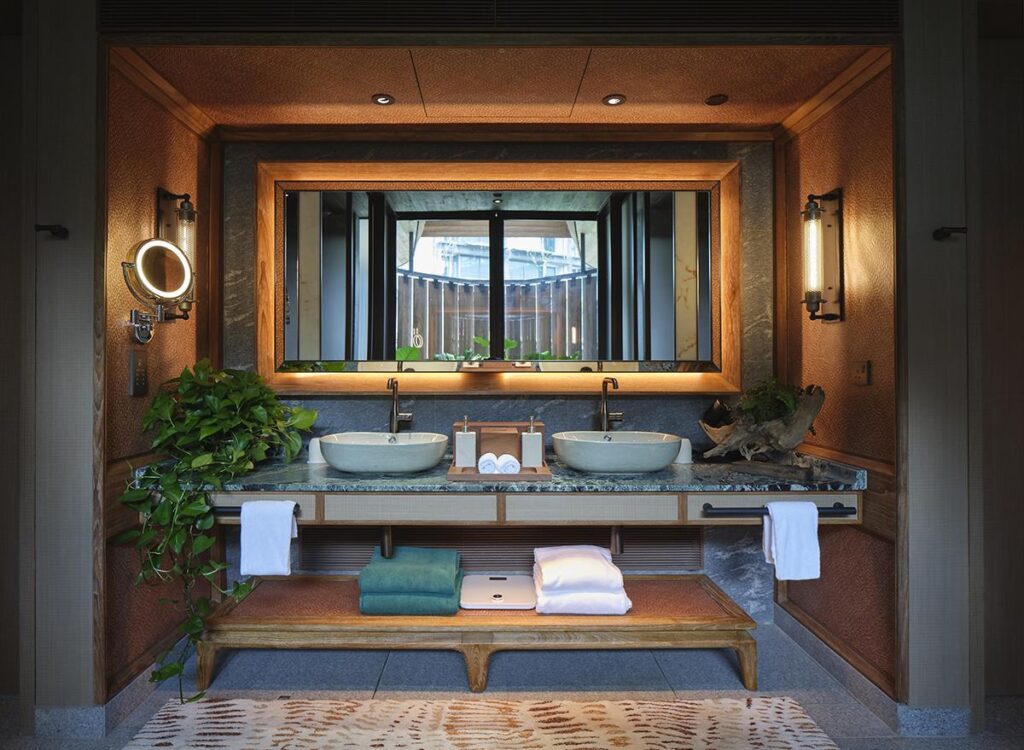
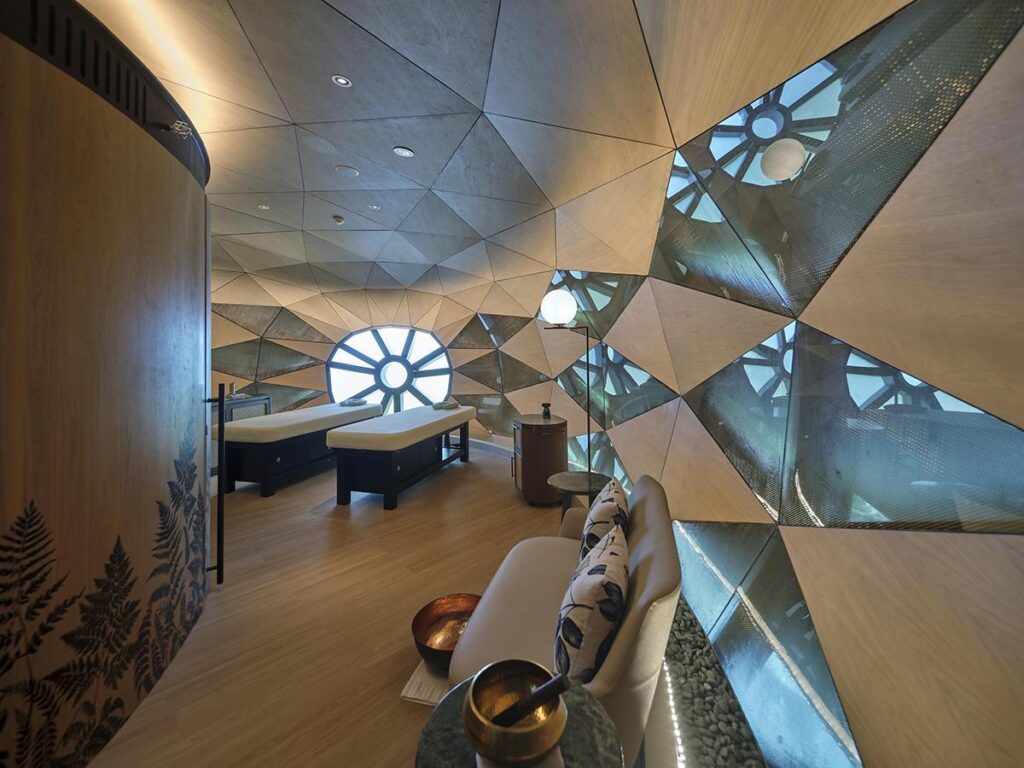
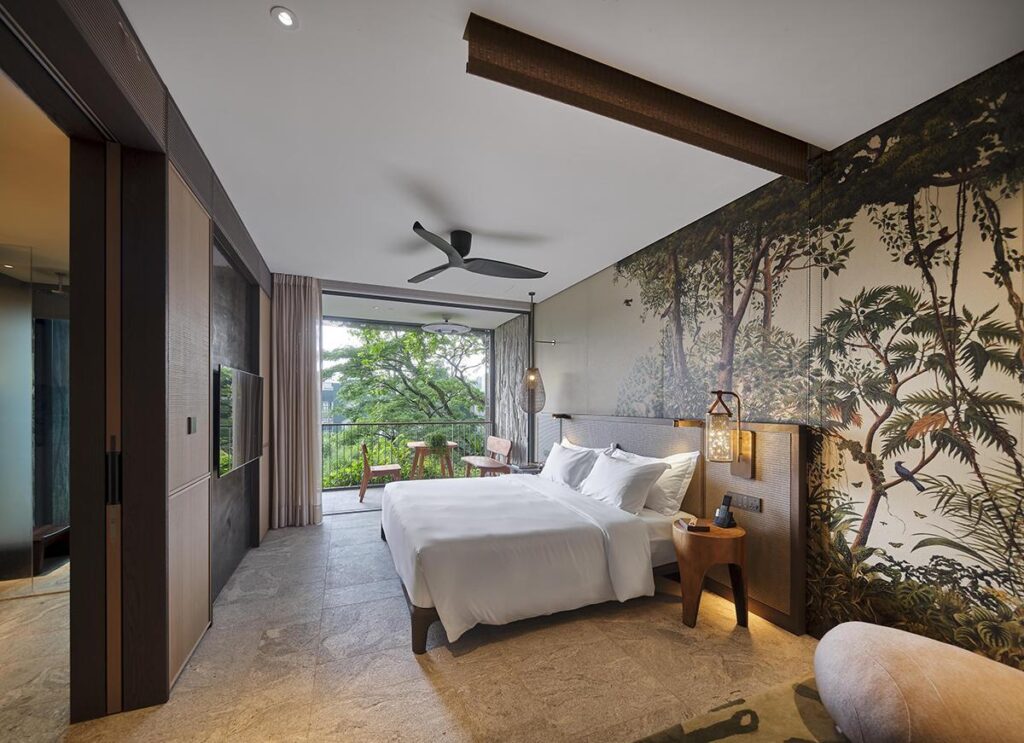
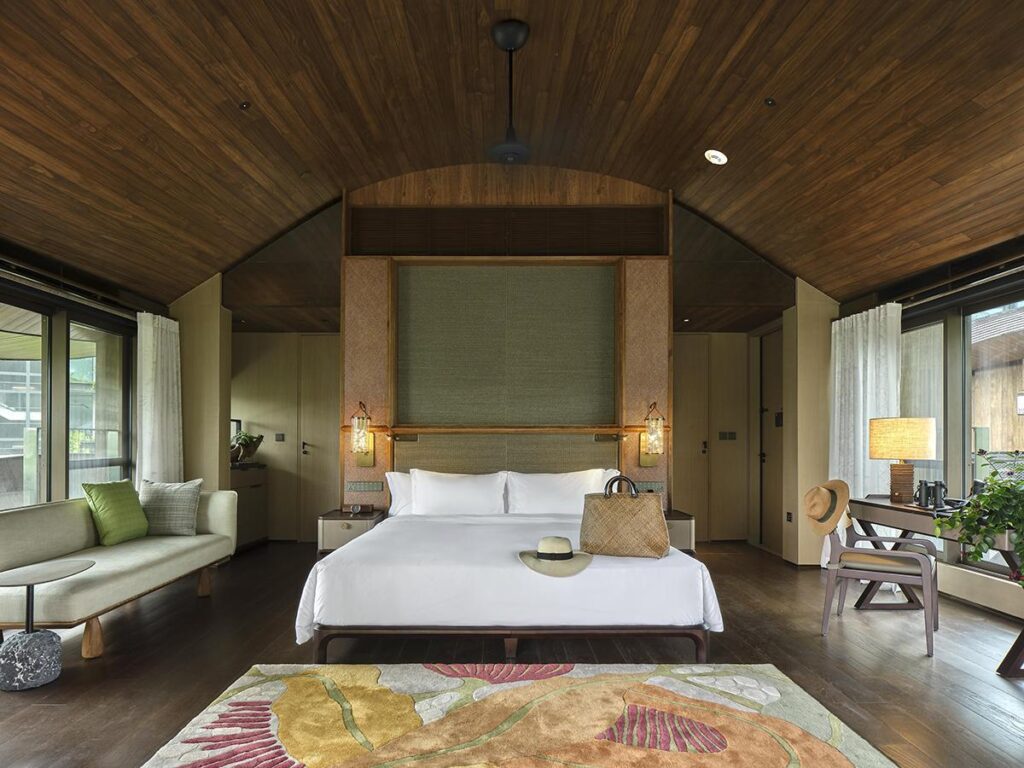
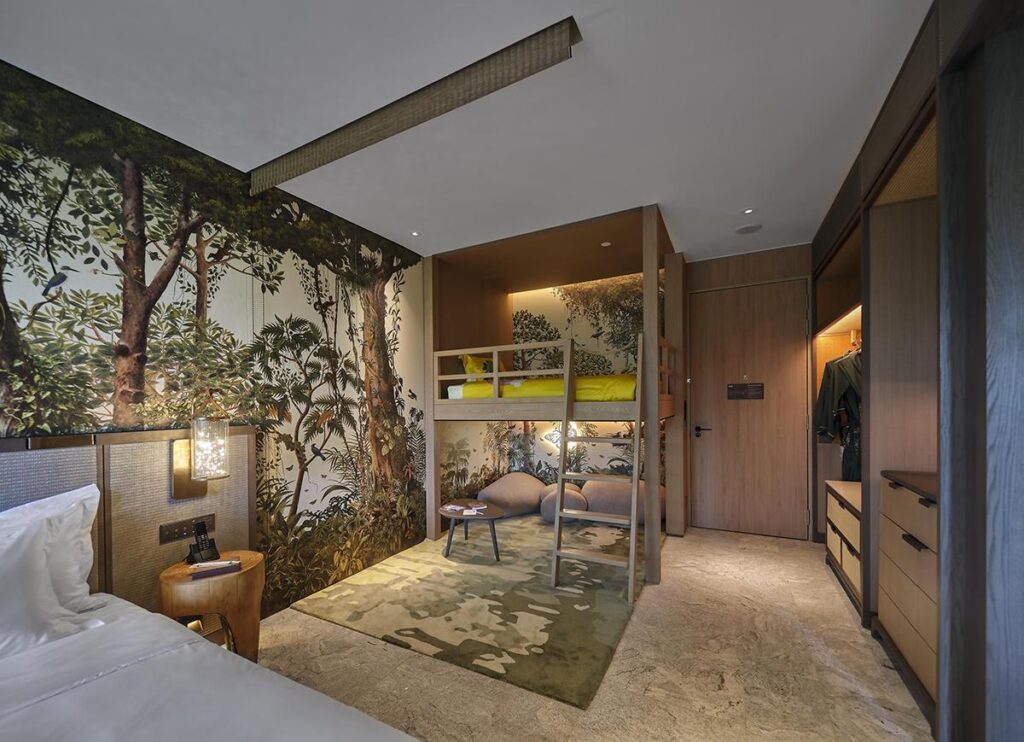
The interior design continues the journey of adventure and discovery through the layers of the jungle. The interior spaces and furnishing offer new paradigms of comfort and coexistence with the outdoor and tropical climate, inviting guests to discover and adapt to be intriguingly closer to nature.
Guest rooms are designed to be comfortable shelters from which to observe the jungle and be very close to nature. Sliding doors, verandas, and balconies blend indoors with outdoors, with material continuity from interior to exterior.