

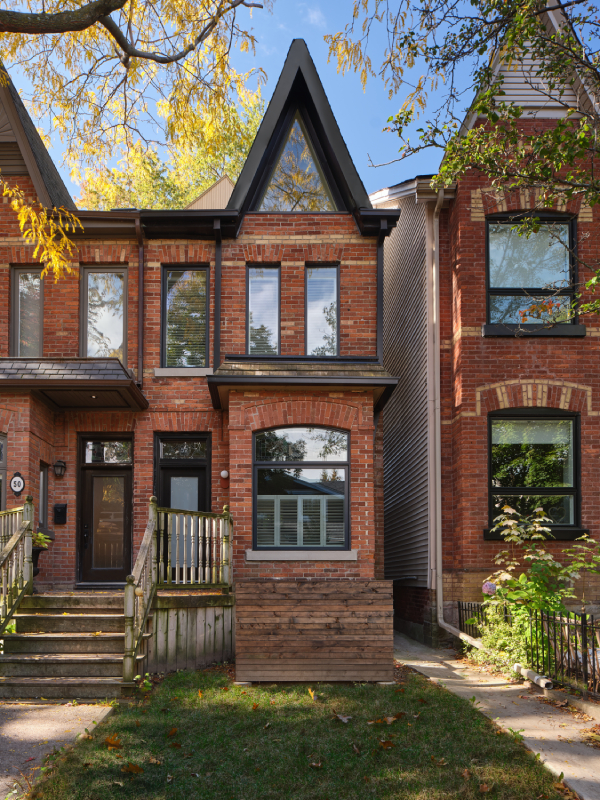
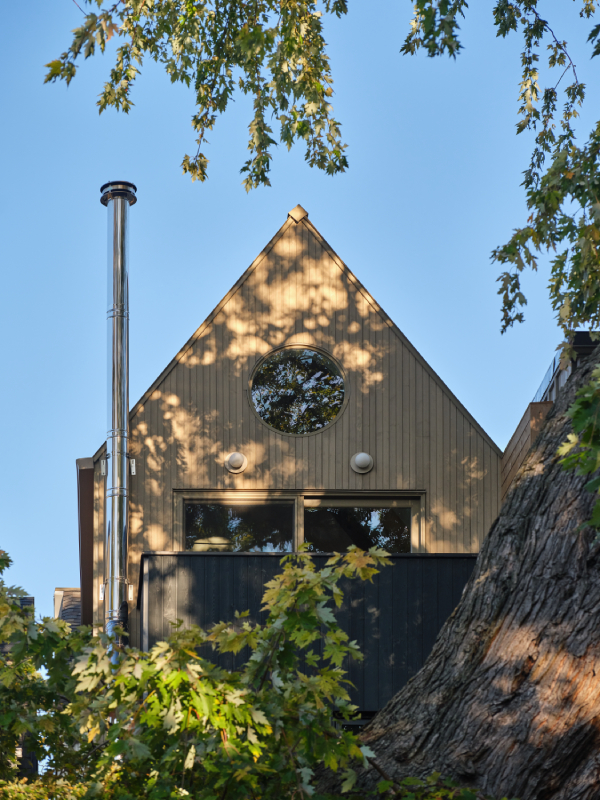
In Toronto’s east-end Leslieville neighborhood, a modest mid-19th-century Victorian house has been reimagined into a bright, spatially fluid family home. House Caroline balances heritage preservation with a confident contemporary intervention, where a new A-frame addition redefines the relationship between light, volume, and daily living.
Originally built circa 1850, the 2,200-square-foot structure suffered from the familiar constraints of its era—narrow proportions, compartmentalized rooms, and limited access to daylight. The renovation, completed in 2023, transforms these limitations into opportunities. At its core, the project is less about expansion alone and more about recalibration: of light, circulation, and connection to the outdoors.
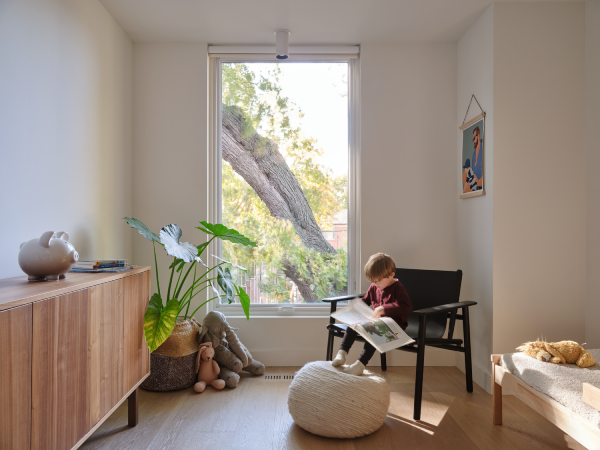
The design was guided by two key ambitions: to create a home aligned with the rhythms of a growing family, and to preserve a mature maple tree anchoring the rear yard. This tree becomes both a literal and conceptual focal point, informing the orientation of new openings and the spatial hierarchy of the addition. The result is a house that looks outward.
Inside, precision millwork plays a central role in resolving the home’s narrow footprint. In the dining area, a custom banquette is seamlessly integrated into the existing bay window, softening the geometry while maximizing usable space. The intervention maintains a clear flow from entry to kitchen, reinforcing a sense of continuity across the ground floor.
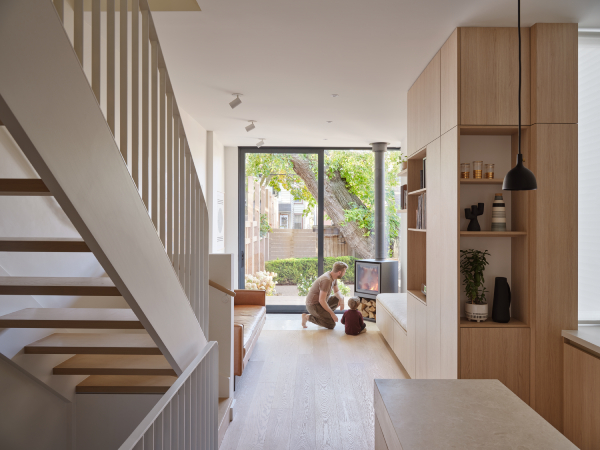
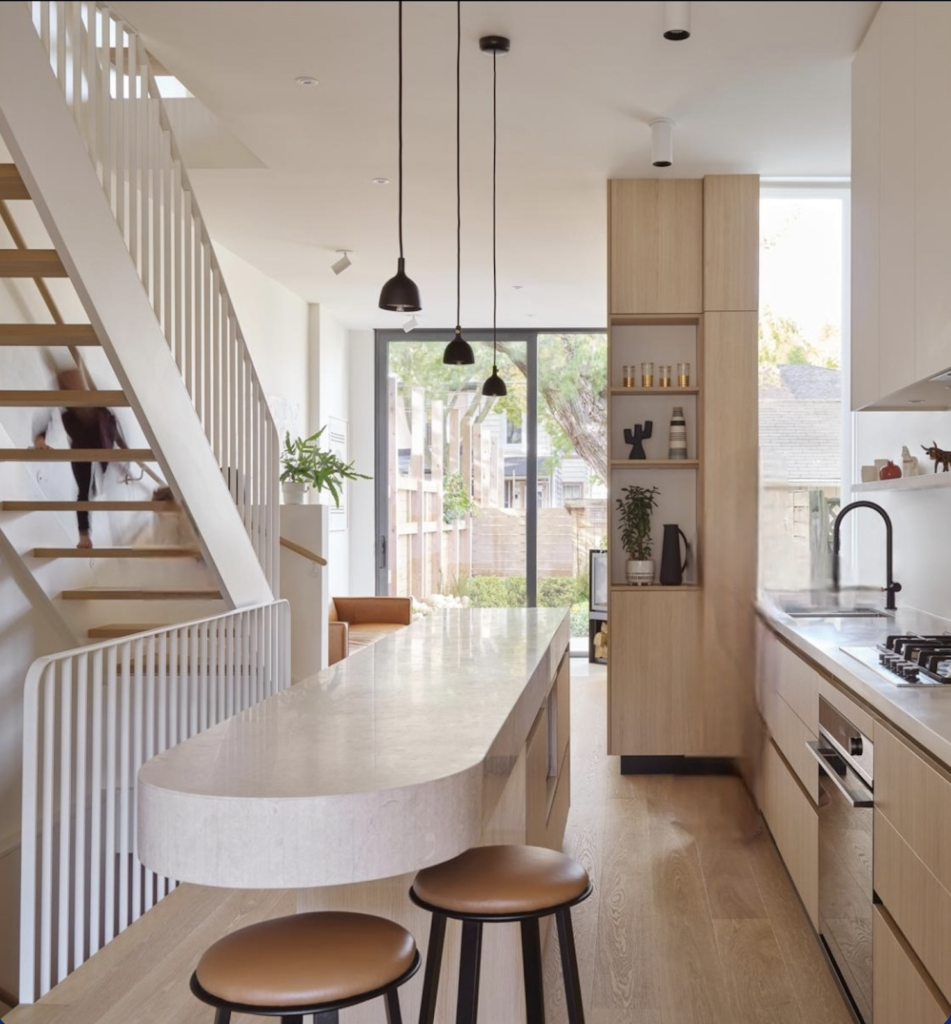
At the heart of the home, the kitchen and living areas are unified through a continuous wall of oak cabinetry that merges storage, display, and seating. This hybrid element operates as both infrastructure and furniture—housing a media unit, concealing storage, and offering informal seating adjacent to a wood-burning fireplace. The effect is one of quiet efficiency, where utility and atmosphere are tightly interwoven.
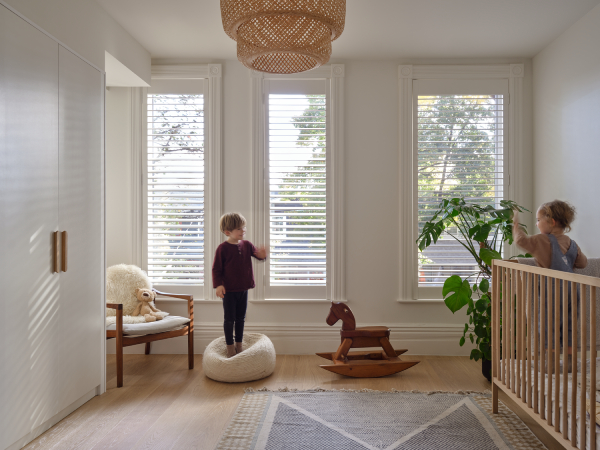
Circulation is similarly refined. A compact double-winder staircase replaces a more conventional layout, freeing up valuable square footage and enabling a more generous distribution of program. This strategic move allows for moments of spatial generosity—most notably, a marble-topped kitchen island and improved functionality across all three levels.
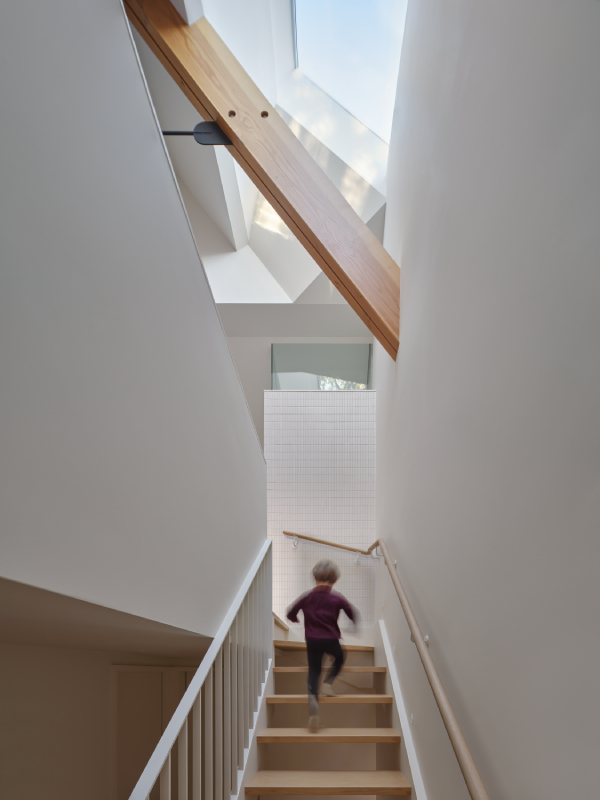
Light becomes the project’s defining material. Working within a north-facing condition, the design captures sunlight from above and from the rear, drawing in southern and western exposures wherever possible. On the ground floor, full-height glazing dissolves the boundary between interior and garden, framing views of the maple tree while animating the living spaces with shifting daylight.
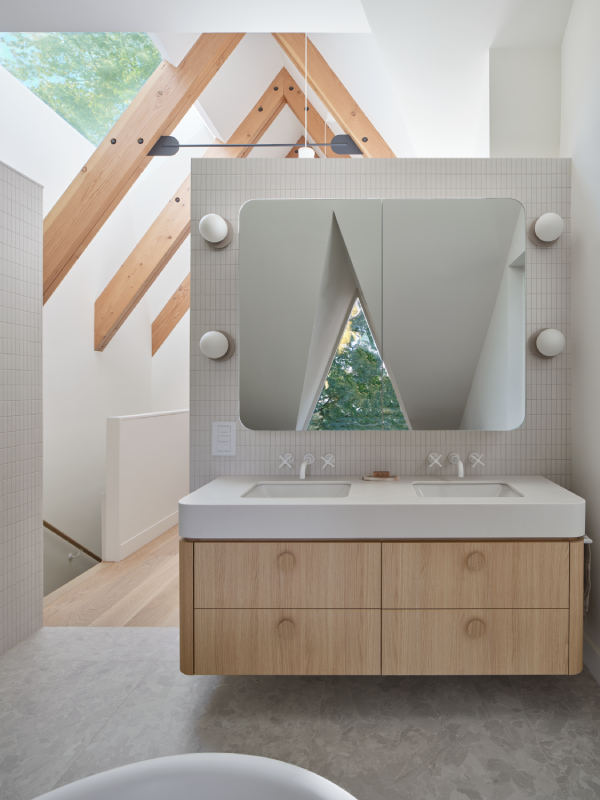
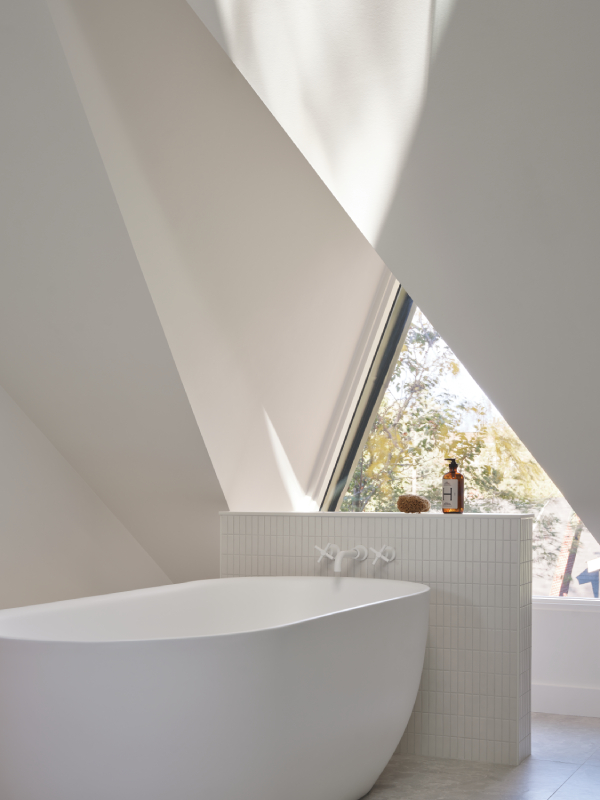
The vertical experience of the house is equally considered. An open stairwell leads upward toward a skylight embedded within the A-frame roof, creating a gradual transition from enclosure to openness. Exposed Douglas fir beams articulate the new structure, lending warmth and a tactile connection to the natural world. The interplay of timber, light, and volume culminates in a space that feels both expansive and intimate.
House Caroline is ultimately a study in balance—between old and new, constraint and openness, architecture and landscape. Through careful material selection, integrated design strategies, and a clear sensitivity to context, the project demonstrates how even the most compact urban homes can be transformed into environments of clarity, warmth, and enduring relevance.
Photography: Riley Snelling